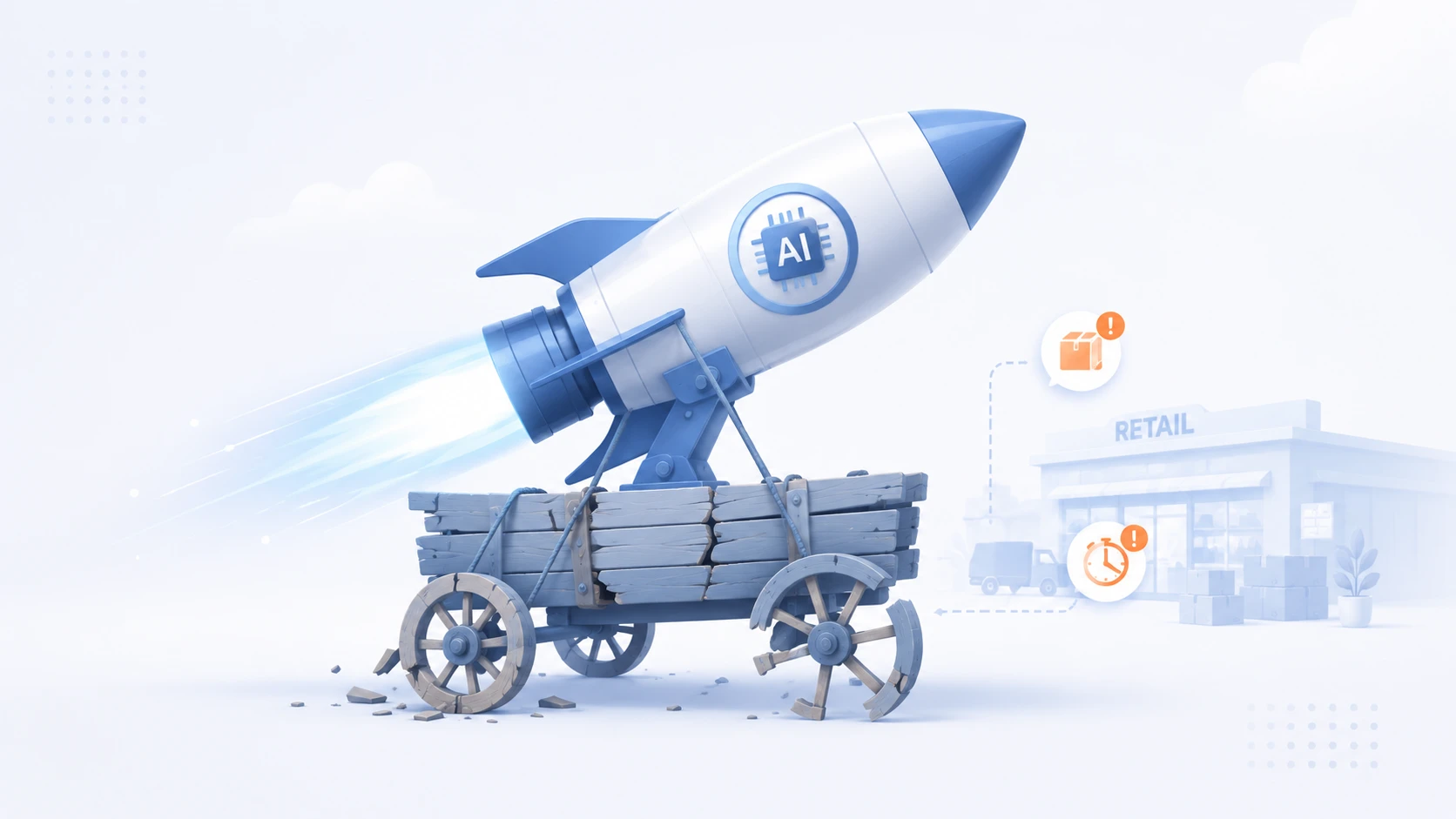
Retail systems are inherently complex: a large number of points of sale, multiple sales channels, and constant changes in inventory all demand clear and precise processes. In practice, however, most problems don’t stem from strategy, but from day-to-day operations.
A typical example is the situation when the numbers don’t add up. Goods arrive at the warehouse, but the stock level doesn’t match the system. That’s when an ad hoc process kicks in: emails get sent, Excel spreadsheets are checked, points of sale are called, and there’s an attempt to reconstruct what happened. Information comes from multiple sources, often with repetition and additional checks, until the problem is finally resolved — sometimes after several hours or even days.
A process like this doesn’t formally exist, yet it plays out every single day.
A typical example is the situation when the numbers don’t add up. Goods arrive at the warehouse, but the stock level doesn’t match the system. That’s when an ad hoc process kicks in: emails get sent, Excel spreadsheets are checked, points of sale are called, and there’s an attempt to reconstruct what happened. Information comes from multiple sources, often with repetition and additional checks, until the problem is finally resolved — sometimes after several hours or even days.
A process like this doesn’t formally exist, yet it plays out every single day.
Why the problem isn't visible right away
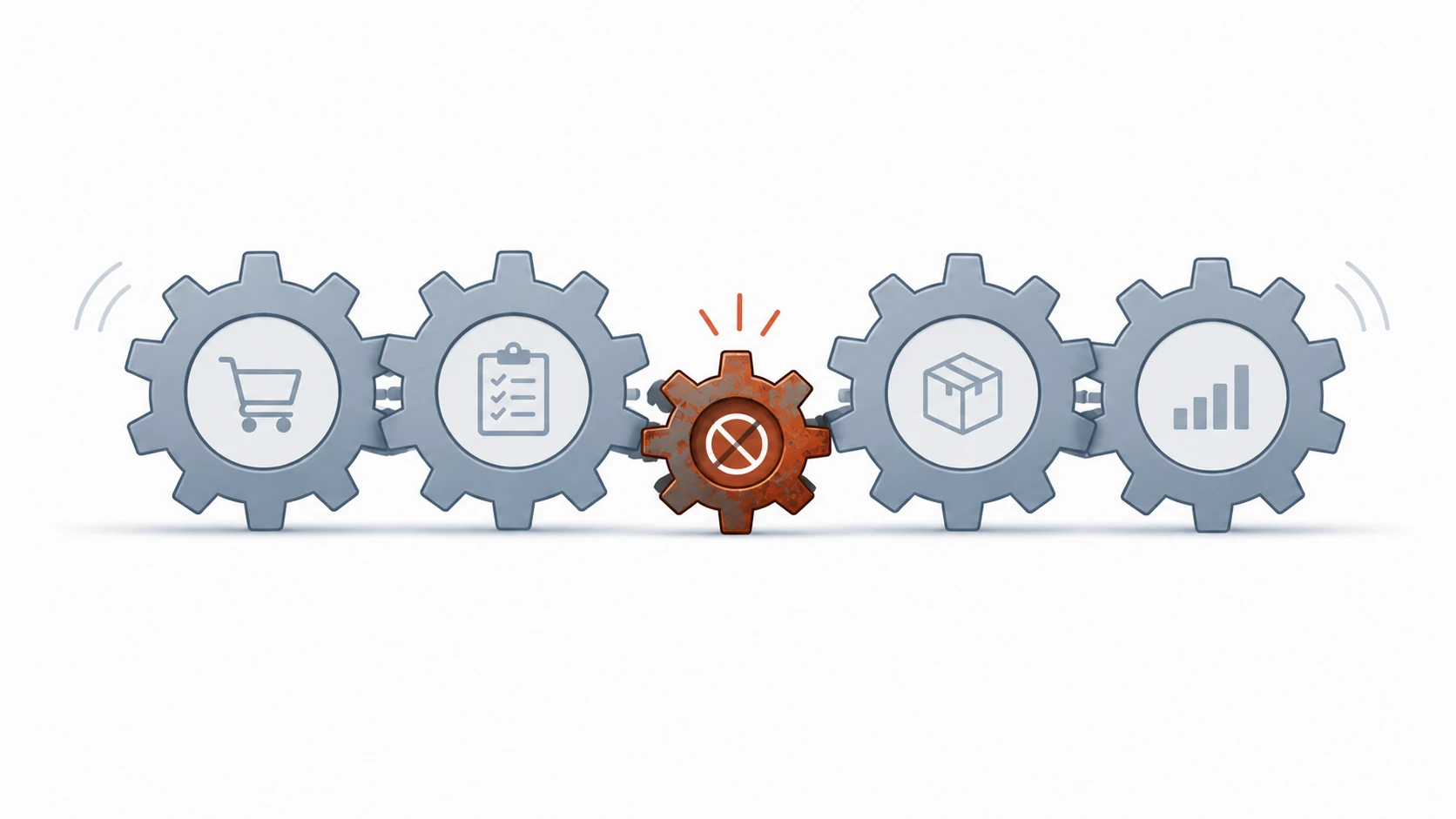
At first glance, it seems the cause lies in errors or logistics. The essential problem, however, is that the process isn’t defined, has no owner, and isn’t tracked in one place. Every new case starts from scratch, without continuity and without any room for improvement.
Problems like these often go unnoticed because they do get resolved in the end. The operations team manages to “push through,” but at a high cost: employees’ time goes into manual work, knowledge stays in the heads of individuals, and mistakes keep repeating. In one retail system, resolving situations like these took practically an entire working day of one person — not because of the complexity of the problem, but because of the way it was being solved.
Patterns like these are typical in environments where there is no clearly defined process management and where work relies on coordination instead of on a system.
Problems like these often go unnoticed because they do get resolved in the end. The operations team manages to “push through,” but at a high cost: employees’ time goes into manual work, knowledge stays in the heads of individuals, and mistakes keep repeating. In one retail system, resolving situations like these took practically an entire working day of one person — not because of the complexity of the problem, but because of the way it was being solved.
Patterns like these are typical in environments where there is no clearly defined process management and where work relies on coordination instead of on a system.
What it looks like when a process actually exists
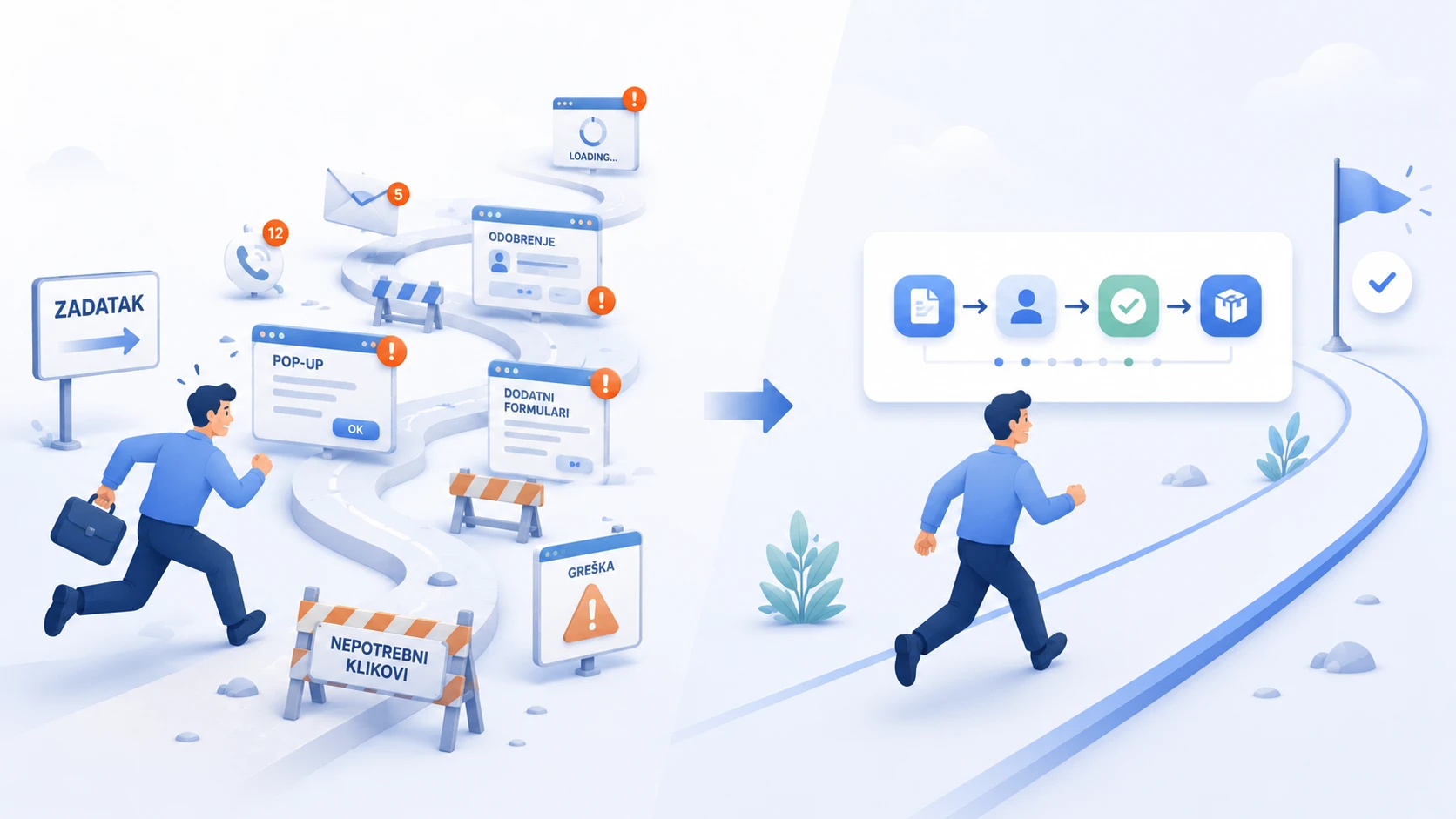
It’s important to stress that this isn’t an employee problem, but a system problem. When a process isn’t clearly defined and managed, improvisation becomes the everyday way of working.
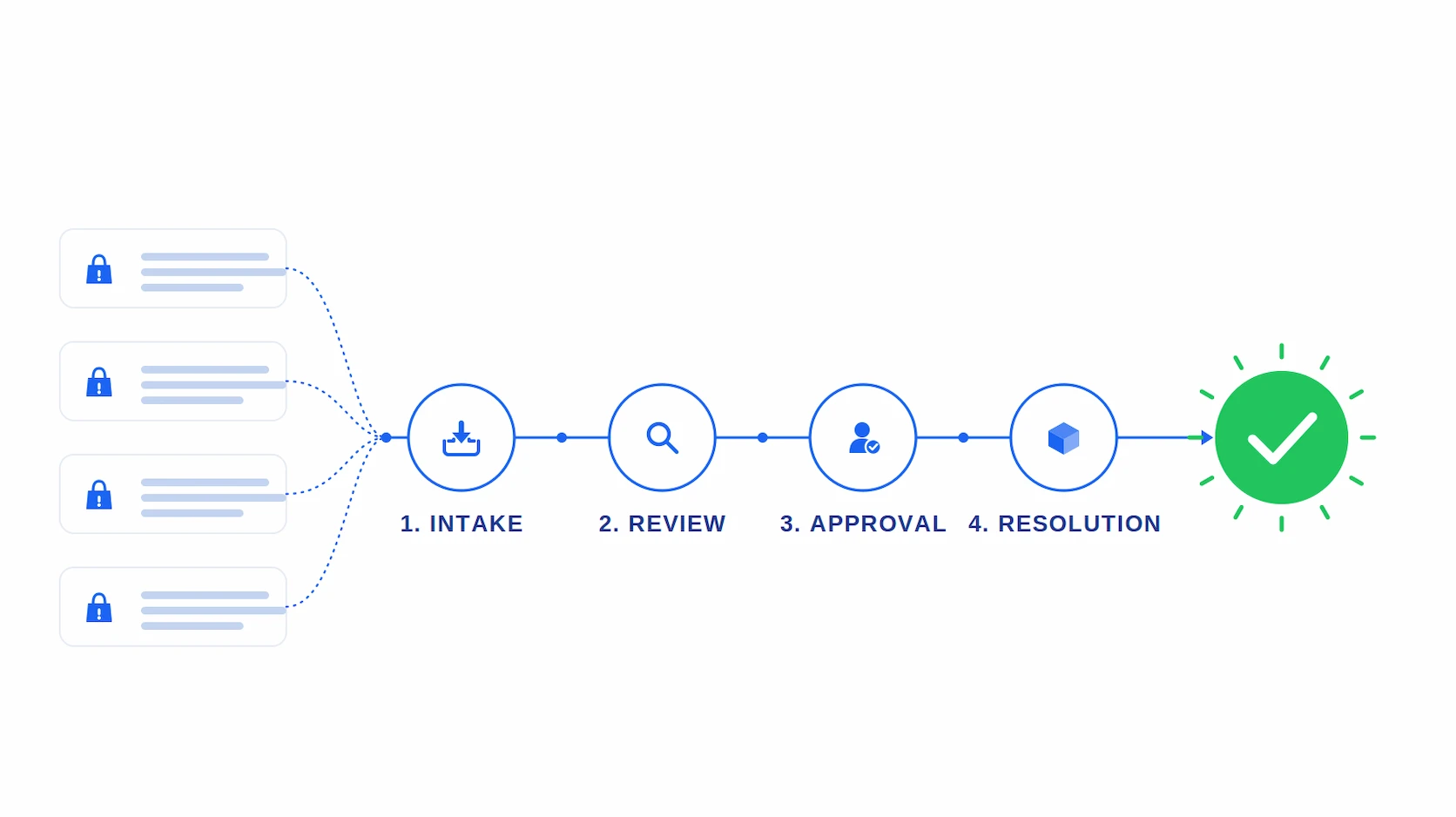
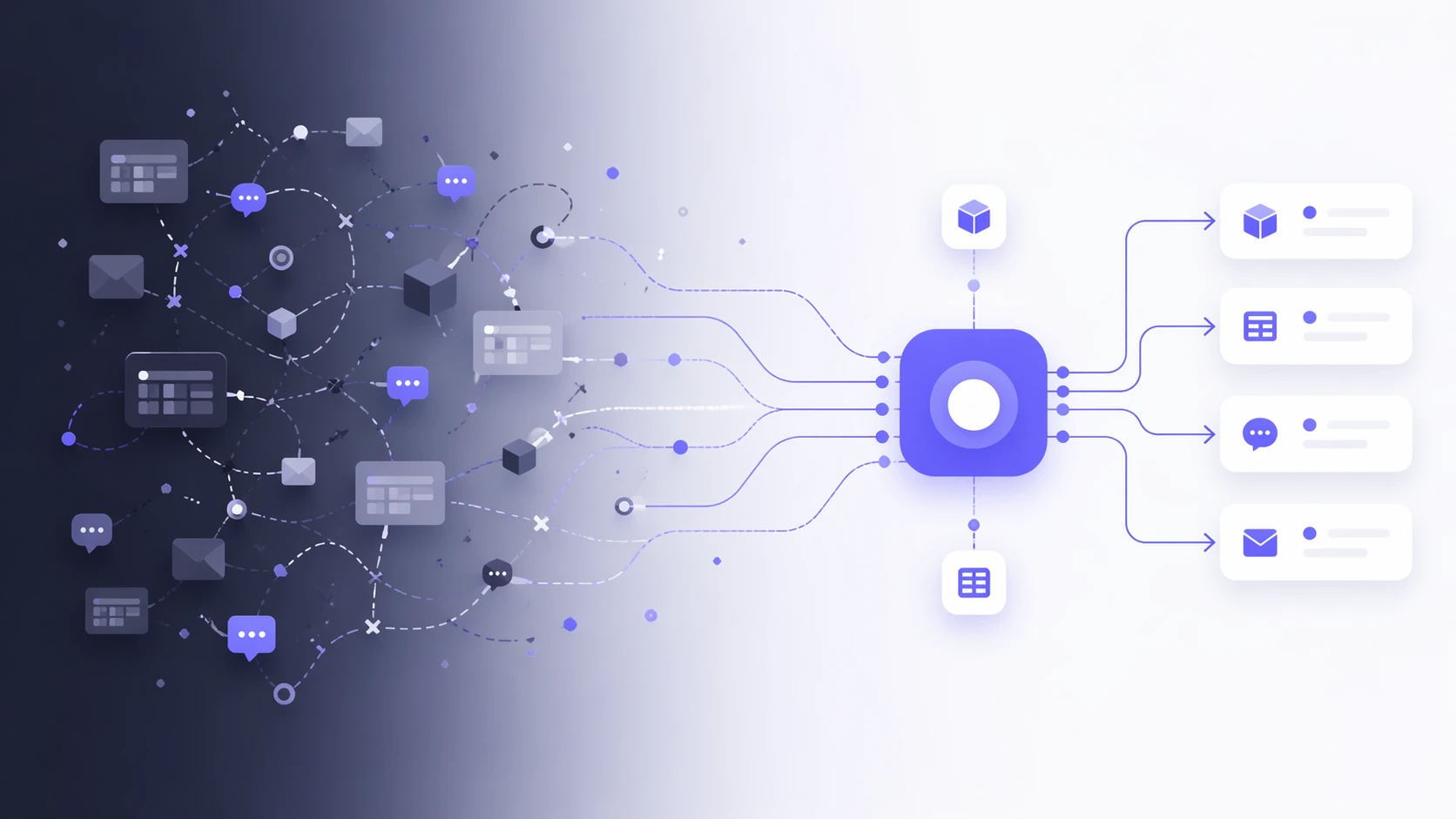
When the same scenario is set up as a clear, orchestrated process, every step gets an owner, information is available in one place, and the workflow becomes visible and predictable. Tasks that used to take hours are reduced to a fraction of the time, with fewer errors and greater control.
This approach is the foundation of modern process management and enables companies to react faster, scale their operations more easily, and reduce operational costs.
This is exactly why more and more companies are moving to platforms that don’t just digitize work, but actively manage processes and their flow. Solutions like the sSuite platform enable full visibility, clearly defined steps, and control over every part of the operation, without relying on improvisation. Problems in retail operations are rarely isolated. More often, they’re the consequence of invisible processes that work as long as people maintain them manually, but as the system grows, their impact becomes ever greater.
If you recognize yourself in situations like these, there’s a strong chance that part of your business depends on processes that aren’t clearly defined. You can see concrete examples of how challenges like these are solved in practice through the Sistemiv references, as well as through the way the sSuite platform enables full visibility and control over business processes.
When the same scenario is set up as a clear, orchestrated process, every step gets an owner, information is available in one place, and the workflow becomes visible and predictable. Tasks that used to take hours are reduced to a fraction of the time, with fewer errors and greater control.
This approach is the foundation of modern process management and enables companies to react faster, scale their operations more easily, and reduce operational costs.
This is exactly why more and more companies are moving to platforms that don’t just digitize work, but actively manage processes and their flow. Solutions like the sSuite platform enable full visibility, clearly defined steps, and control over every part of the operation, without relying on improvisation. Problems in retail operations are rarely isolated. More often, they’re the consequence of invisible processes that work as long as people maintain them manually, but as the system grows, their impact becomes ever greater.
If you recognize yourself in situations like these, there’s a strong chance that part of your business depends on processes that aren’t clearly defined. You can see concrete examples of how challenges like these are solved in practice through the Sistemiv references, as well as through the way the sSuite platform enables full visibility and control over business processes.