On the operations director’s screen, a chart is glowing green. A new, expensively bought AI-based algorithm has just detected a trend and automatically launched an aggressive marketing campaign for a particular shoe model. Customers respond in record time and orders come pouring in. It’s every retailer’s dream — until you look at what’s happening one floor down.
In the warehouse, it’s a state of siege. The webshop’s stock levels sync with the central database only twice a day. Warehouse staff run between shelves with printed delivery notes, looking for goods that sold out in the physical stores long ago, but the software hasn’t recorded it yet. Meanwhile, customer service is on fire with calls from furious customers, and agents lose fifteen minutes each searching three disconnected systems just to locate where a package got stuck.
Your innovative AI tool has just created operational chaos, while you sit in your office looking at a report showing an excellent level of engagement with the ad.
In the warehouse, it’s a state of siege. The webshop’s stock levels sync with the central database only twice a day. Warehouse staff run between shelves with printed delivery notes, looking for goods that sold out in the physical stores long ago, but the software hasn’t recorded it yet. Meanwhile, customer service is on fire with calls from furious customers, and agents lose fifteen minutes each searching three disconnected systems just to locate where a package got stuck.
Your innovative AI tool has just created operational chaos, while you sit in your office looking at a report showing an excellent level of engagement with the ad.
Why smart tools break down on messy processes
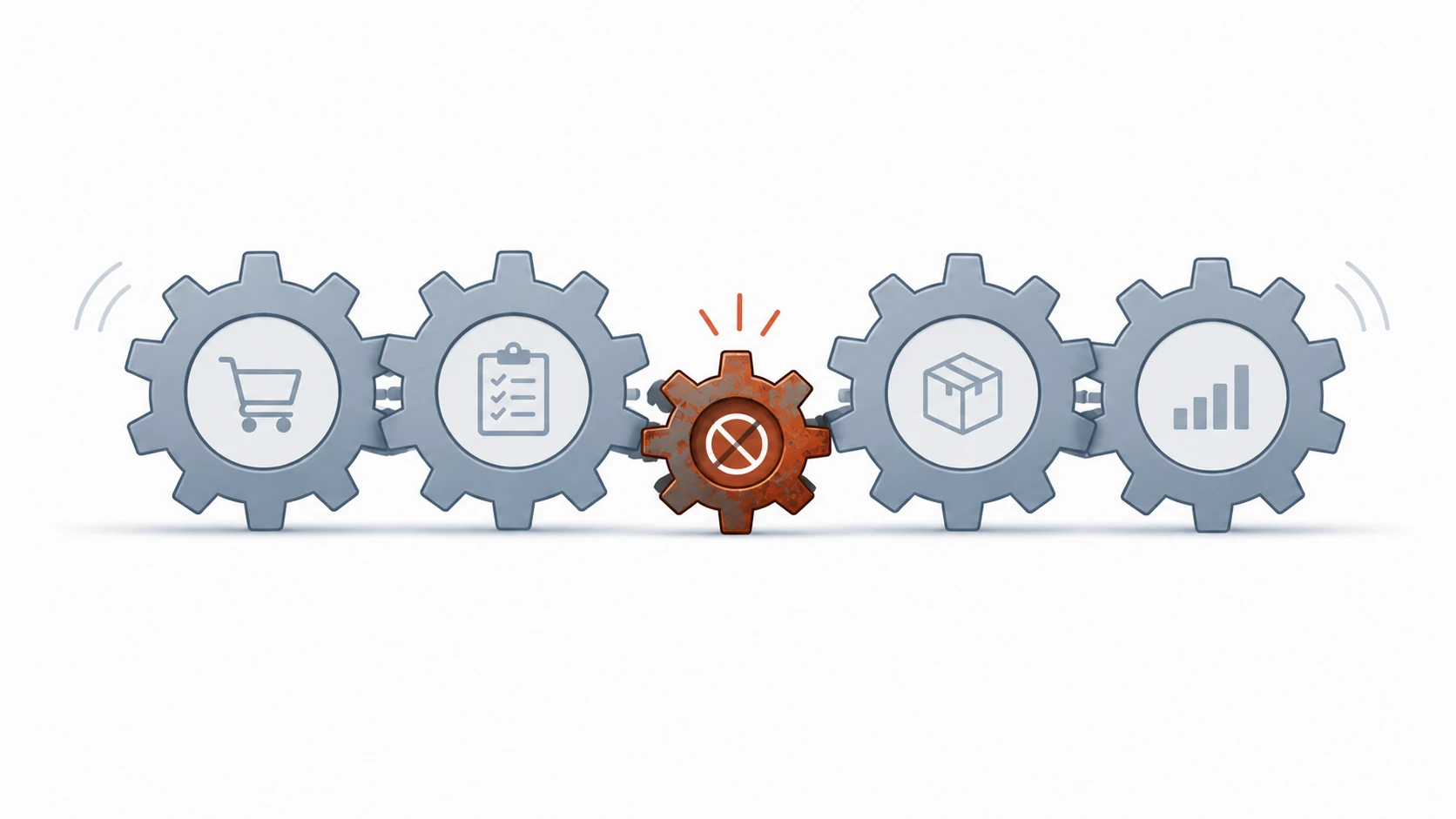
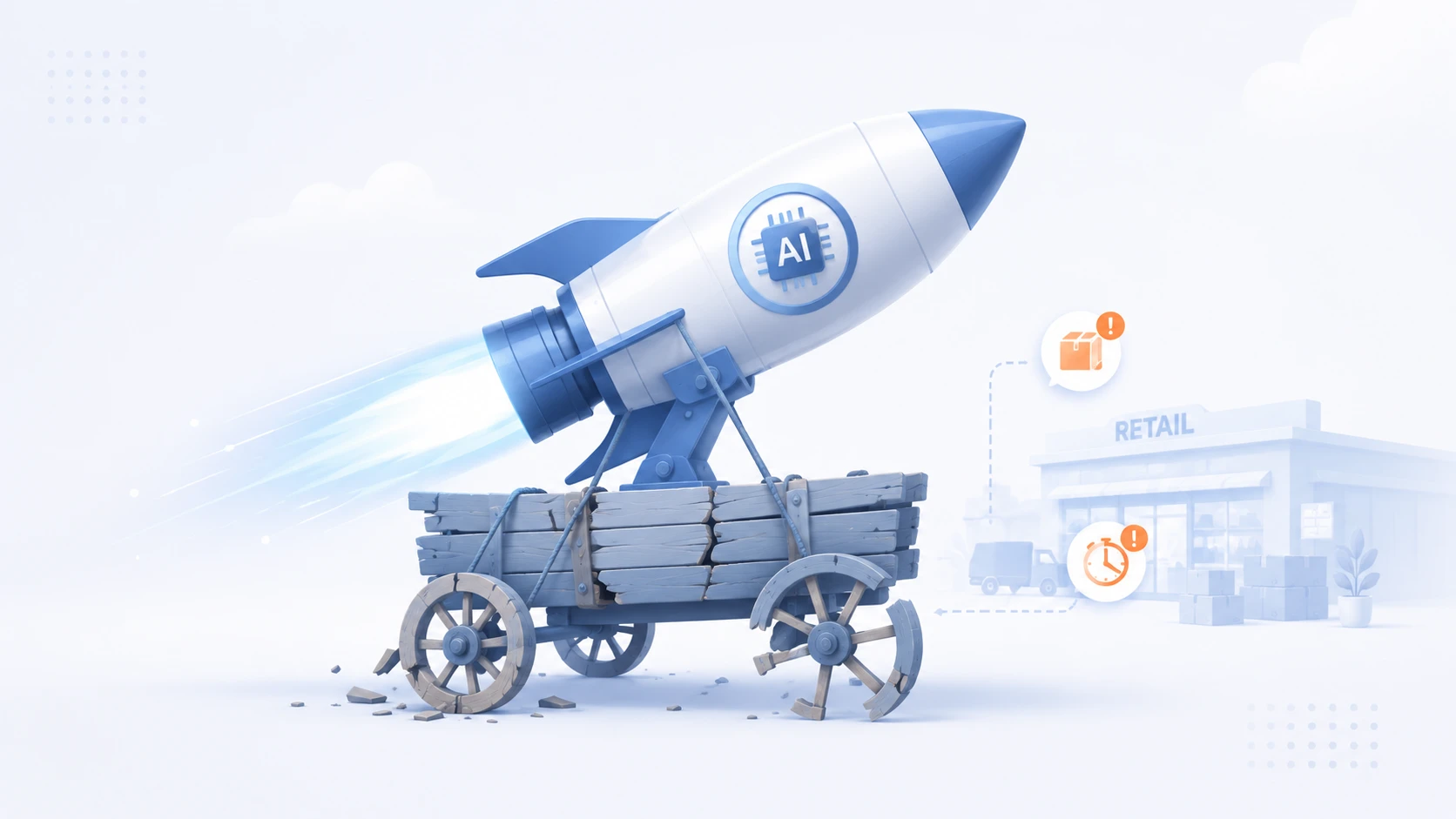
Management usually shifts the blame onto the IT department or the technology itself, claiming the system simply wasn’t integrated properly. The truth is that the algorithm works flawlessly and makes decisions at the speed of light based on the data you feed it. The problem is that those fast decisions drop down into operational machinery that still moves at the pace of paper, manual data entry, and phone checks. Implementing AI into disordered workflows is like bolting a jet engine onto a wooden cart — the result isn’t faster transport, but a faster crash.
The systemic cause of this collapse lies in the isolated silos your company operates in. The e-commerce platform sells, but it doesn’t communicate with logistics in real time. Customer service can’t see what’s actually happening at the loading dock. When every department keeps its own isolated database, the AI draws conclusions based on fragmented and often inaccurate information.
The algorithm can’t go down to the warehouse and fix a mistyped barcode in an Excel spreadsheet. As long as your operational process depends on someone physically carrying information from one interface to another, any serious digital transformation of the whole chain remains technically impossible.
The systemic cause of this collapse lies in the isolated silos your company operates in. The e-commerce platform sells, but it doesn’t communicate with logistics in real time. Customer service can’t see what’s actually happening at the loading dock. When every department keeps its own isolated database, the AI draws conclusions based on fragmented and often inaccurate information.
The algorithm can’t go down to the warehouse and fix a mistyped barcode in an Excel spreadsheet. As long as your operational process depends on someone physically carrying information from one interface to another, any serious digital transformation of the whole chain remains technically impossible.
What operational readiness for innovation really means
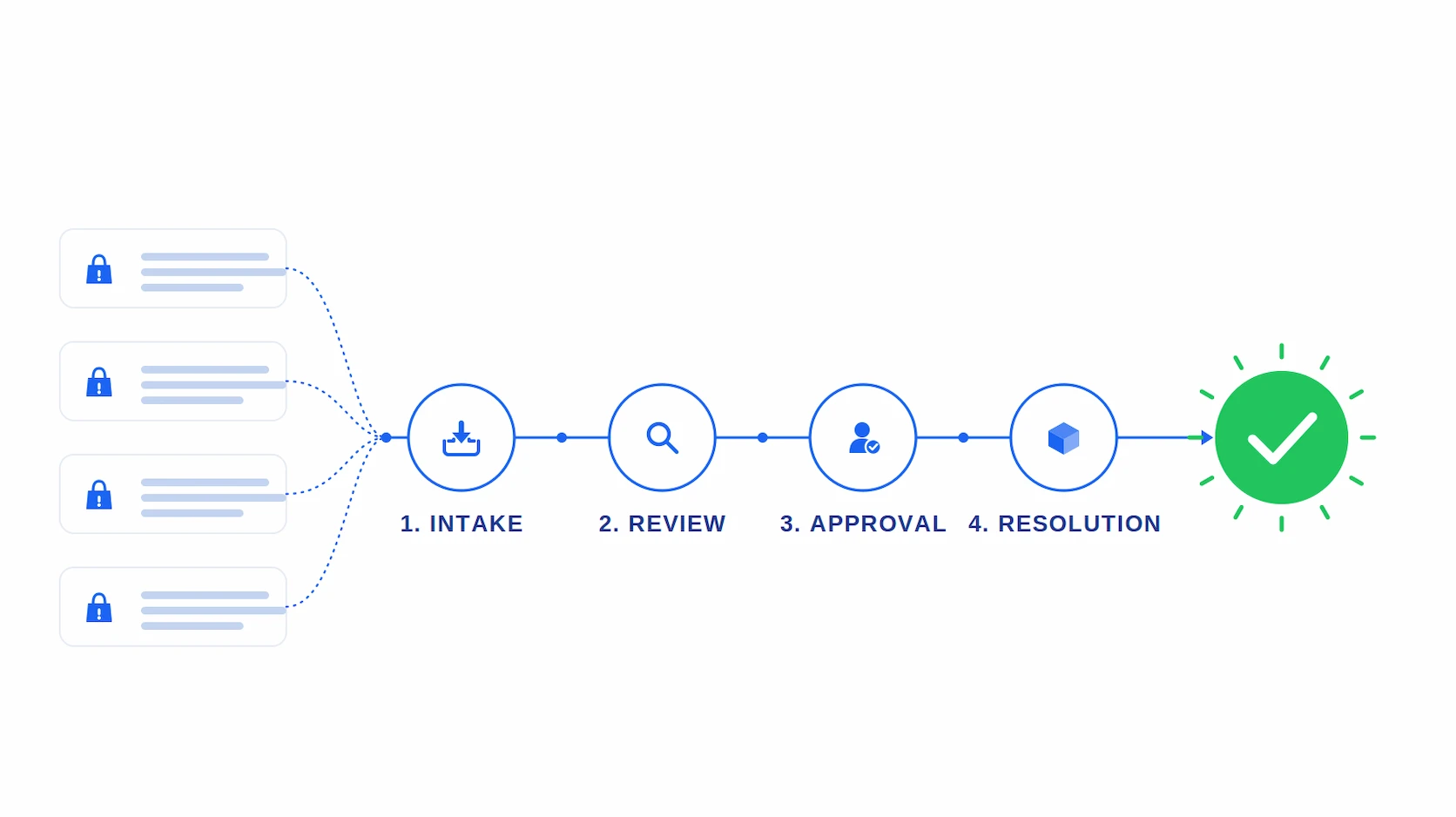
Preparing your infrastructure for smart technologies means that, above all, you need to establish a continuous and logical flow between your people, tasks, and information. A real solution requires an architecture in which a single piece of data automatically — without human intervention — triggers a series of necessary actions across the entire company.
Imagine how the situation from the start of this article looks in a healthy ecosystem. The moment the algorithm flags a spike in demand, a chain reaction kicks off. The system instantly locks the available stock on the site, logistics automatically receives a priority packing list, and the procurement department gets a notification that a critical minimum is being reached — with a draft purchase order for the supplier already prepared.
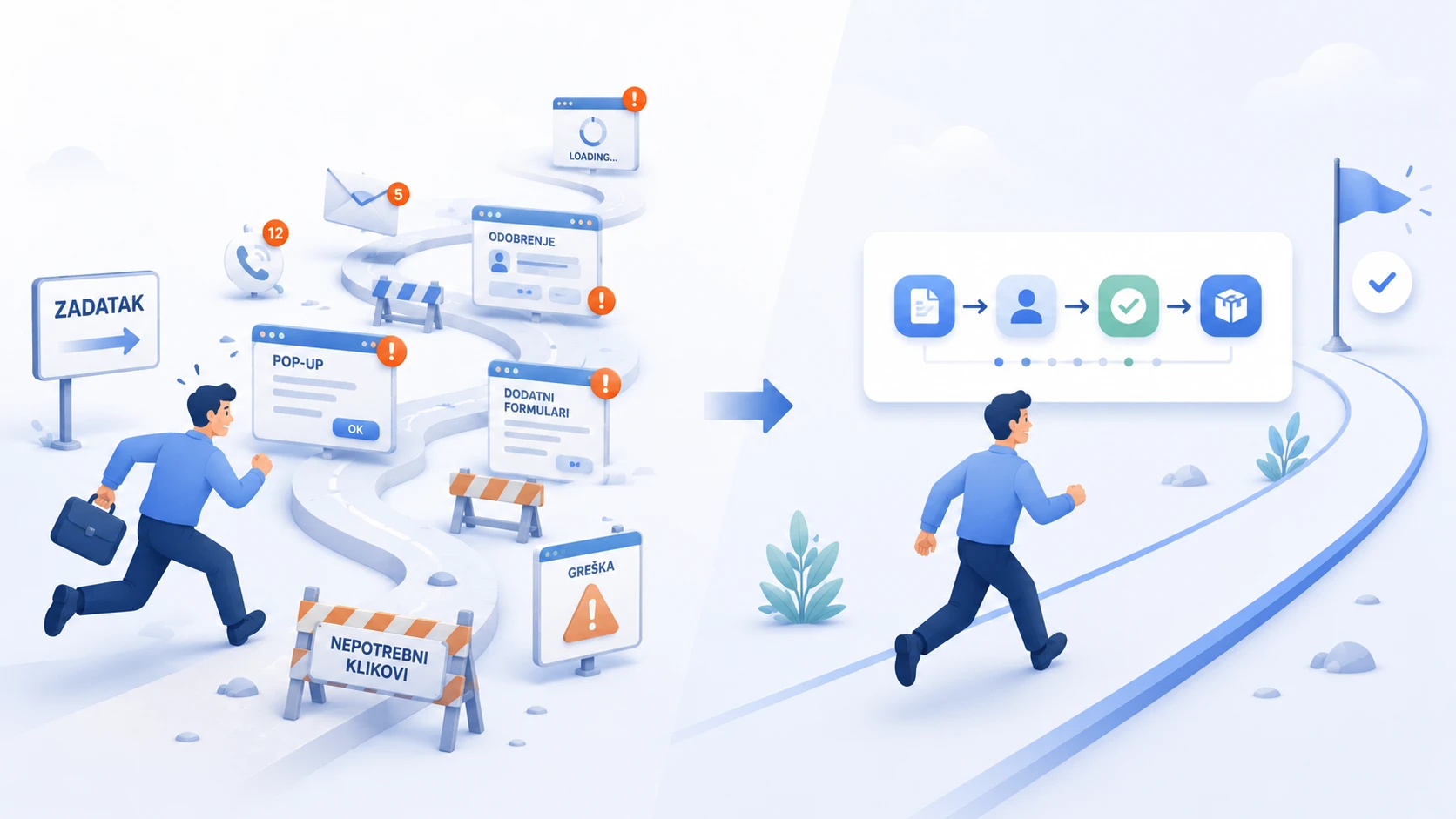
There’s no idle time and no bottlenecks. The manager doesn’t go looking for someone to blame for a delay, because the system proactively detects the problem and automatically alerts the shift lead before the customer even notices anything is wrong. True optimization means the workflow manages the information, rather than employees manually pushing information through the company.
Imagine how the situation from the start of this article looks in a healthy ecosystem. The moment the algorithm flags a spike in demand, a chain reaction kicks off. The system instantly locks the available stock on the site, logistics automatically receives a priority packing list, and the procurement department gets a notification that a critical minimum is being reached — with a draft purchase order for the supplier already prepared.
There’s no idle time and no bottlenecks. The manager doesn’t go looking for someone to blame for a delay, because the system proactively detects the problem and automatically alerts the shift lead before the customer even notices anything is wrong. True optimization means the workflow manages the information, rather than employees manually pushing information through the company.
Orchestration as the only healthy foundation for AI
For any innovation to deliver the expected result, you need an agile, well-ordered foundation. This is where sSuite comes in — a business orchestration platform that acts as the intelligent connective tissue within your existing systems, making your architecture fully ready for an upgrade.
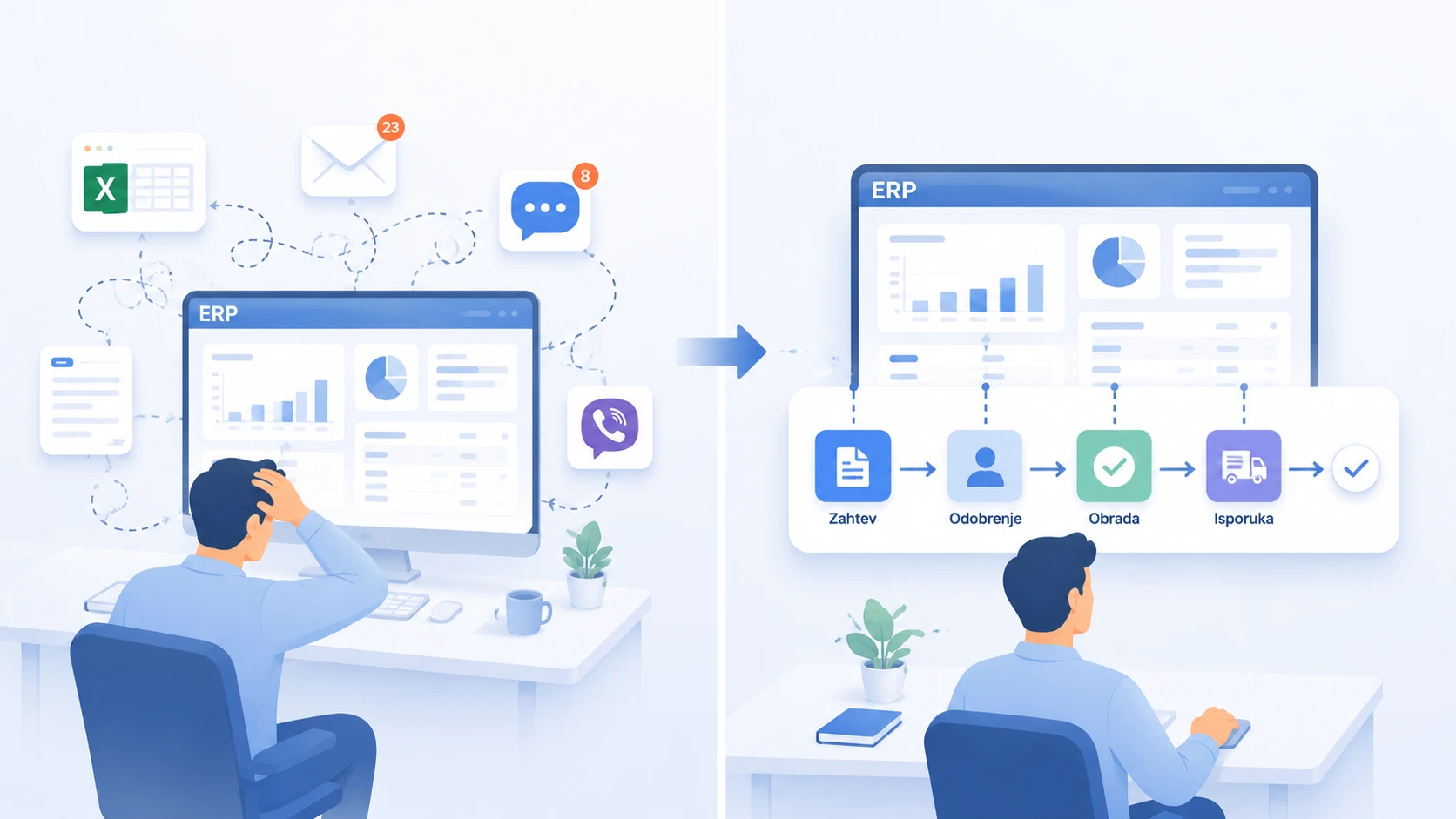
When Planeta Sport decided to standardize its process for selling defective goods — which previously relied on hundreds of emails, personal judgment calls, and unwieldy spreadsheets — introducing the sSuite platform turned every step, from assessing the damage to the final price approval, into something digitally guided and transparent.
The result was clear: human-factor errors were eliminated, and the control that was established raised the profit margin share by more than 120%. This success comes from one simple fact: the process can no longer be bypassed or ignored.
Through the no-code approach sSuite brings, your operations managers get the tools to design and adjust the rules their tasks must follow on their own, without waiting on the IT department. The central system becomes a perfect environment for algorithms, because the data moving through it is constantly accurate and up to date.
When Planeta Sport decided to standardize its process for selling defective goods — which previously relied on hundreds of emails, personal judgment calls, and unwieldy spreadsheets — introducing the sSuite platform turned every step, from assessing the damage to the final price approval, into something digitally guided and transparent.
The result was clear: human-factor errors were eliminated, and the control that was established raised the profit margin share by more than 120%. This success comes from one simple fact: the process can no longer be bypassed or ignored.
Through the no-code approach sSuite brings, your operations managers get the tools to design and adjust the rules their tasks must follow on their own, without waiting on the IT department. The central system becomes a perfect environment for algorithms, because the data moving through it is constantly accurate and up to date.
Innovation without a foundation isn't innovation
Investing in attractive software packages before you sort out your basic operational procedures is the most expensive mistake in retail. AI can spot a million-dollar market opportunity in a millisecond, but it’s up to your warehouse, procurement, and logistics to actually deliver and charge for those goods.
Real digitalization isn’t about installing modern code, but about smartly organizing the team that serves that code and the processes that code drives.
Contact Sistemiv for a demo of the platform and solutions and secure a stable flow of data before an expensive AI implementation drives you to a collapse on the ground.
Real digitalization isn’t about installing modern code, but about smartly organizing the team that serves that code and the processes that code drives.
Contact Sistemiv for a demo of the platform and solutions and secure a stable flow of data before an expensive AI implementation drives you to a collapse on the ground.