Your customer-support agent has just taken a deep breath before picking up the phone, knowing an angry customer is waiting on the other end. The problem is always the same: a complaint about an expensive pair of shoes was filed a few days ago, but no one knows where the request currently is. The customer claims they sent an email, the agent can’t find that email in the shared inbox, and the colleague in charge of communicating with the warehouse is out in the field and isn’t answering the phone.
While the customer threatens to call in the inspectors, your employee frantically searches through various Excel spreadsheets, trying to find at least the number the case was filed under somewhere in the message history. In the end, it turns out the request stayed in the folder of an employee who has since changed positions, and no one took over their unfinished tasks.
Situations like these aren’t the exception, but the rule in companies that treat complaints as a series of isolated administrative steps. Every time a customer files a complaint, a complex chain is triggered that involves sales, logistics, finance, and often external services as well.
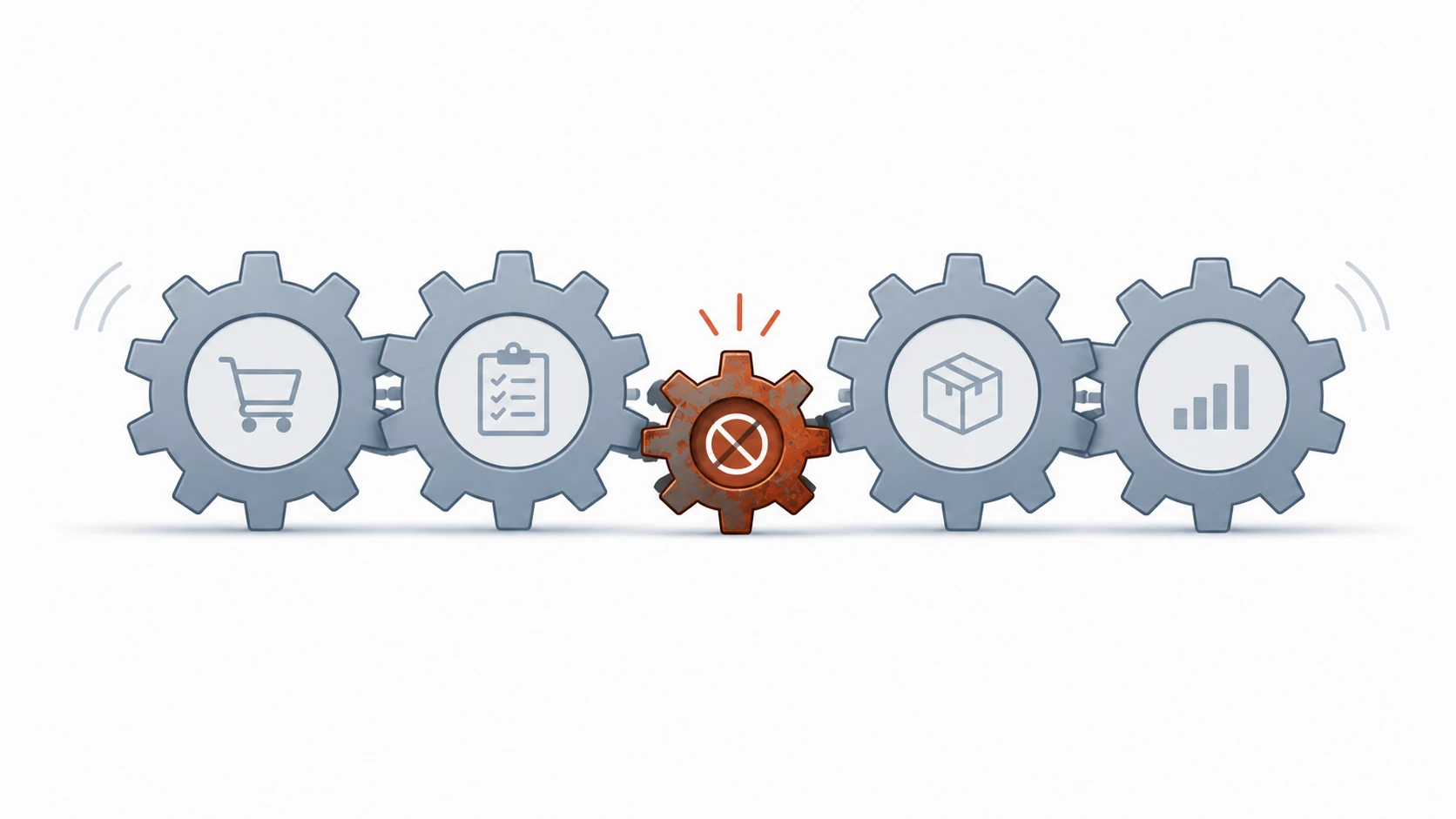
In a disorganized system, that chain breaks at every step, because information travels solely through human interaction. Management often sees lapses like these as an individual’s loss of focus, but in reality it’s a systemic problem that no amount of warnings to employees can solve.
While the customer threatens to call in the inspectors, your employee frantically searches through various Excel spreadsheets, trying to find at least the number the case was filed under somewhere in the message history. In the end, it turns out the request stayed in the folder of an employee who has since changed positions, and no one took over their unfinished tasks.
Situations like these aren’t the exception, but the rule in companies that treat complaints as a series of isolated administrative steps. Every time a customer files a complaint, a complex chain is triggered that involves sales, logistics, finance, and often external services as well.
In a disorganized system, that chain breaks at every step, because information travels solely through human interaction. Management often sees lapses like these as an individual’s loss of focus, but in reality it’s a systemic problem that no amount of warnings to employees can solve.
Why paper and email aren't your allies in resolving complaints
The main reason the complaint-handling process usually resembles chaos is the reliance on inadequate communication channels. An email inbox is a place where information goes to be forgotten — not a tool for tracking a workflow. When information about a customer’s dissatisfaction enters the company by email, it becomes static. It has no expiration date, no clear owner, and no mechanism to alert you that nothing has been done about it for hours or days.
The systemic cause of the problem is the lack of a visible process flow. In most companies, business digitalization stopped at entering complaint data into some kind of database, but that database doesn’t drive the process forward. It only records what happened — it doesn’t dictate what should happen next. That’s why invisible handoffs occur: the warehouse thinks finance knows a refund needs to be issued, while finance waits for confirmation from quality control that never arrived, because it got lost in someone’s inbox.
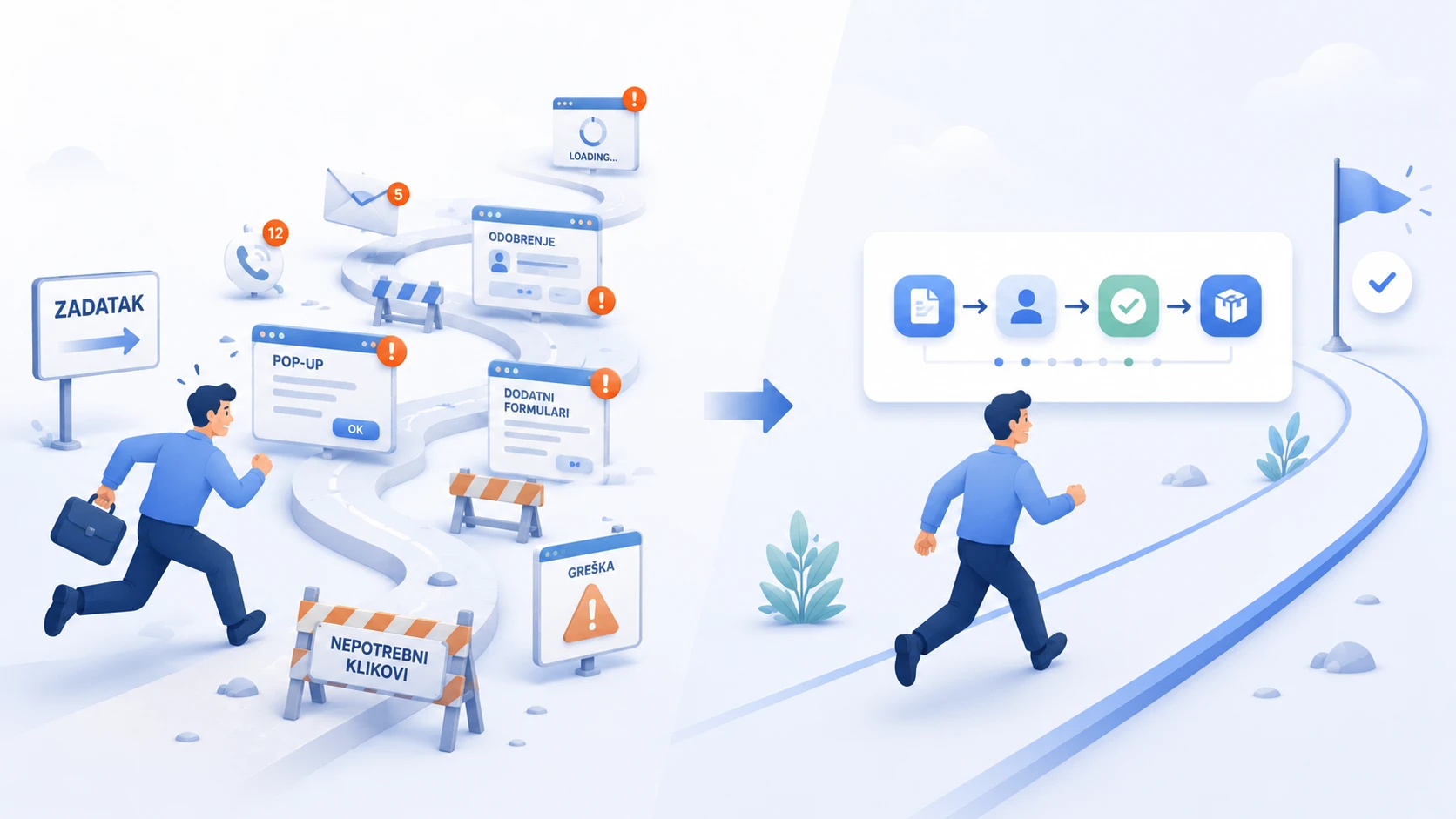
In such an environment, automating administrative tasks is often misunderstood as merely introducing a digital form. The problem isn’t the form, but the fact that no one manages the path that form has to travel. As long as your employees rely on their own memory and the goodwill of colleagues from another department, complaints will remain a bottleneck that directly eats away at your profit and reputation. A failure to process a complaint isn’t a technical glitch, but an architectural flaw in the way your operations are designed.
The systemic cause of the problem is the lack of a visible process flow. In most companies, business digitalization stopped at entering complaint data into some kind of database, but that database doesn’t drive the process forward. It only records what happened — it doesn’t dictate what should happen next. That’s why invisible handoffs occur: the warehouse thinks finance knows a refund needs to be issued, while finance waits for confirmation from quality control that never arrived, because it got lost in someone’s inbox.
In such an environment, automating administrative tasks is often misunderstood as merely introducing a digital form. The problem isn’t the form, but the fact that no one manages the path that form has to travel. As long as your employees rely on their own memory and the goodwill of colleagues from another department, complaints will remain a bottleneck that directly eats away at your profit and reputation. A failure to process a complaint isn’t a technical glitch, but an architectural flaw in the way your operations are designed.
What a world where a complaint can't go astray looks like
A successfully resolved complaint isn’t one that was merely recorded, but one that flowed through the system without a single unnecessary call or email. The real solution means creating an environment in which the system takes on the role of traffic controller.
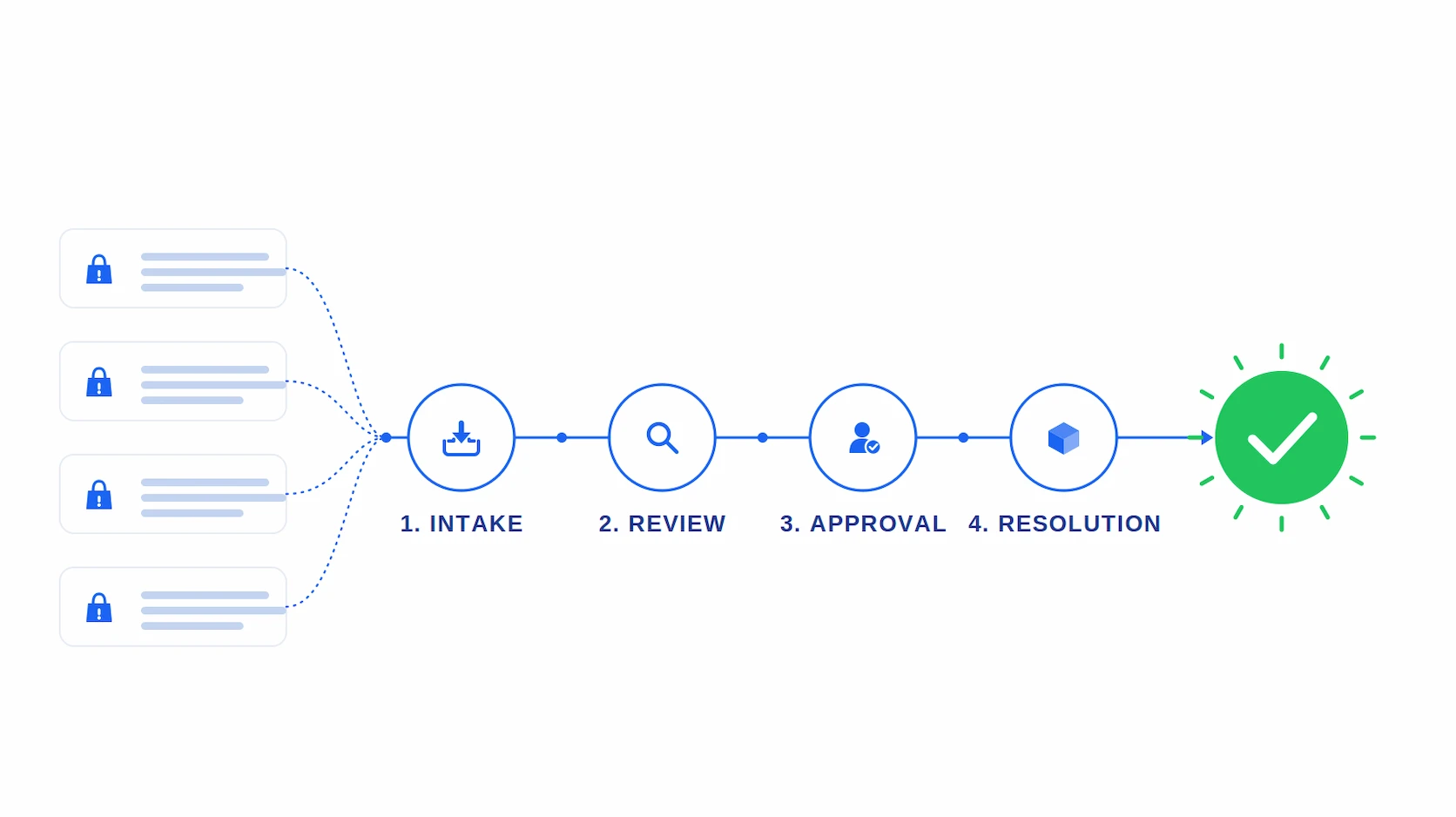
Imagine that the moment a customer fills in a request, the system automatically creates a digital ticket carrying all the necessary information: a photo of the damage, the receipt number, and the purchase history. That ticket appears on the quality controller’s screen the very same second, with a clear countdown to the expiry of the legal deadline.
In a scenario like this, no one has to ask what comes next anymore. If the controller approves the complaint, the system pulls the data itself, notifies the warehouse to prepare a replacement item, and at the same time sends a personalized message to the customer letting them know their request has been resolved. There’s no manual re-typing of data, no chance of entering the complaint number incorrectly and, most importantly, no human factor that can forget about the case.
Management no longer wastes time in meetings analyzing who’s to blame for a lapse; instead, it sees the status of every individual case in real time. If a department starts falling behind, the system escalates on its own and notifies superiors before the problem becomes visible to the client. When business process orchestration is set up this way, efficiency isn’t measured by guesswork, but by concrete seconds saved at every step.
Imagine that the moment a customer fills in a request, the system automatically creates a digital ticket carrying all the necessary information: a photo of the damage, the receipt number, and the purchase history. That ticket appears on the quality controller’s screen the very same second, with a clear countdown to the expiry of the legal deadline.
In a scenario like this, no one has to ask what comes next anymore. If the controller approves the complaint, the system pulls the data itself, notifies the warehouse to prepare a replacement item, and at the same time sends a personalized message to the customer letting them know their request has been resolved. There’s no manual re-typing of data, no chance of entering the complaint number incorrectly and, most importantly, no human factor that can forget about the case.
Management no longer wastes time in meetings analyzing who’s to blame for a lapse; instead, it sees the status of every individual case in real time. If a department starts falling behind, the system escalates on its own and notifies superiors before the problem becomes visible to the client. When business process orchestration is set up this way, efficiency isn’t measured by guesswork, but by concrete seconds saved at every step.
sSuite: Standardization that eliminates human error
This is exactly the transformation that the sSuite platform for automating and orchestrating operations brings. sSuite isn’t just another data-entry tool, but an architecture that ensures every complaint reaches its destination without any detours. The platform is designed to fully adapt to the specific rules of your organization — but to make those rules binding and automated.
The best proof of this approach’s effectiveness is the collaboration with Planeta Sport. Before the sSuite platform was implemented, the complaint process at Planeta Sport was burdened with manual checks and uncertainty in communication between teams. By introducing digital orchestration, every step became measurable and transparent. The result was fast and clear: a fully automated process in which errors were eliminated and all legal and internal deadlines are met without exception. Communication between departments became invisible and instant, because the system routes every piece of information to where it needs to be on its own.
Through the no-code approach sSuite brings, operations managers create and change processes themselves without writing a single line of code. The IT department doesn’t have to spend months programming new rules every time the complaint procedure changes. Everything is visual, logical, and immediately applicable in practice.
The best proof of this approach’s effectiveness is the collaboration with Planeta Sport. Before the sSuite platform was implemented, the complaint process at Planeta Sport was burdened with manual checks and uncertainty in communication between teams. By introducing digital orchestration, every step became measurable and transparent. The result was fast and clear: a fully automated process in which errors were eliminated and all legal and internal deadlines are met without exception. Communication between departments became invisible and instant, because the system routes every piece of information to where it needs to be on its own.
Through the no-code approach sSuite brings, operations managers create and change processes themselves without writing a single line of code. The IT department doesn’t have to spend months programming new rules every time the complaint procedure changes. Everything is visual, logical, and immediately applicable in practice.
A system that works, a customer who comes back
The real value of automation isn’t replacing people with software, but freeing people from the tedious work of re-typing data and correcting other people’s oversights. When the system guarantees zero errors, your company gets the most valuable thing on the market: the trust of a customer who knows that every problem of theirs will be resolved quickly, accurately, and without hassle.
Contact Sistemiv for a demo of the platform and solutions and find out how we can transform complaint handling from a cost center into proof of top-tier professionalism.
Contact Sistemiv for a demo of the platform and solutions and find out how we can transform complaint handling from a cost center into proof of top-tier professionalism.