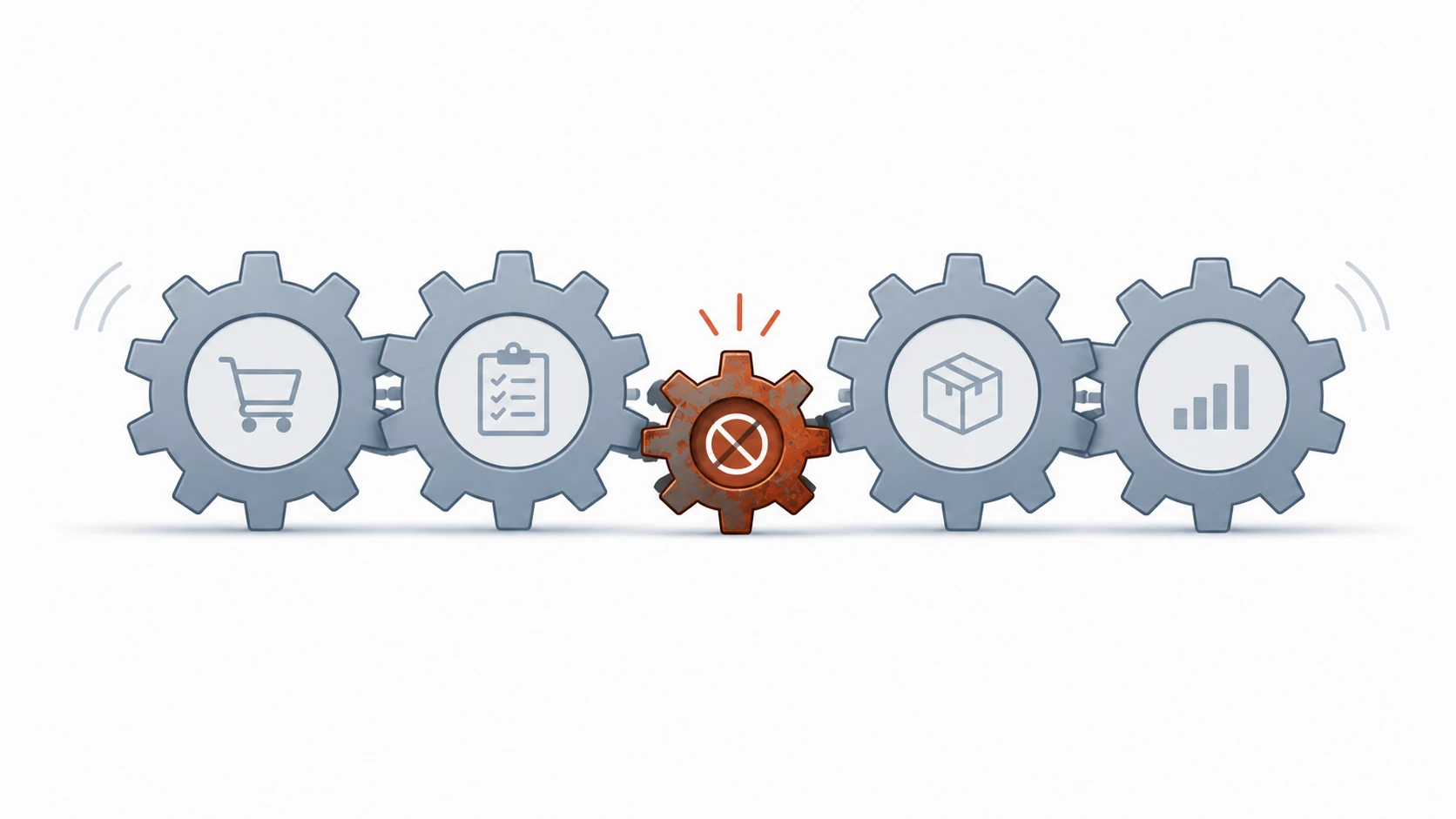
You’re sitting in a quarterly meeting, looking at the financial report. Sales are up 30% compared to the same period last year — which would normally be cause for celebration. But instead of your profit margin growing proportionally, it’s actually shrinking, because operating costs have exploded.
To keep up with that sudden sales growth and process all the requests, you had to hire five new people in administration, lease additional warehouse space due to a lack of inventory visibility, and pay for hundreds of hours of overtime. Your managers are chronically overworked, customer service is recording a record number of complaints about mixed-up packages, and the data in your central software is constantly out of date because the team can’t keep up with entering it on time.
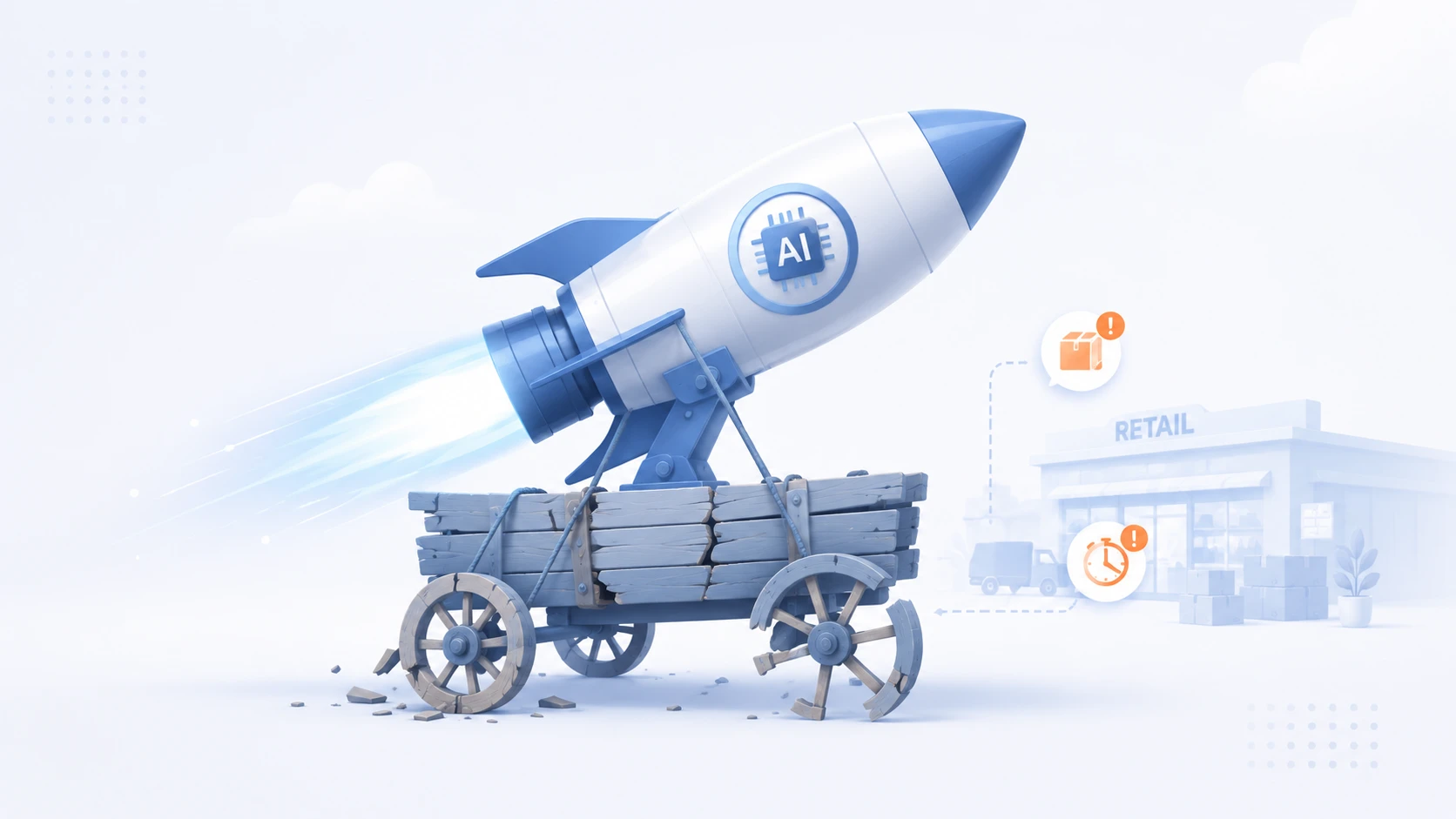
On paper, you think you’re paying the inevitable price of business growth, but in reality you’re paying the penalty for postponing infrastructure changes. Today, every new client brings you not just revenue, but also a disproportionately large amount of manual work that your current operation can no longer swallow.
To keep up with that sudden sales growth and process all the requests, you had to hire five new people in administration, lease additional warehouse space due to a lack of inventory visibility, and pay for hundreds of hours of overtime. Your managers are chronically overworked, customer service is recording a record number of complaints about mixed-up packages, and the data in your central software is constantly out of date because the team can’t keep up with entering it on time.
On paper, you think you’re paying the inevitable price of business growth, but in reality you’re paying the penalty for postponing infrastructure changes. Today, every new client brings you not just revenue, but also a disproportionately large amount of manual work that your current operation can no longer swallow.
Why revenue growth cracks under the pressure of outdated processes
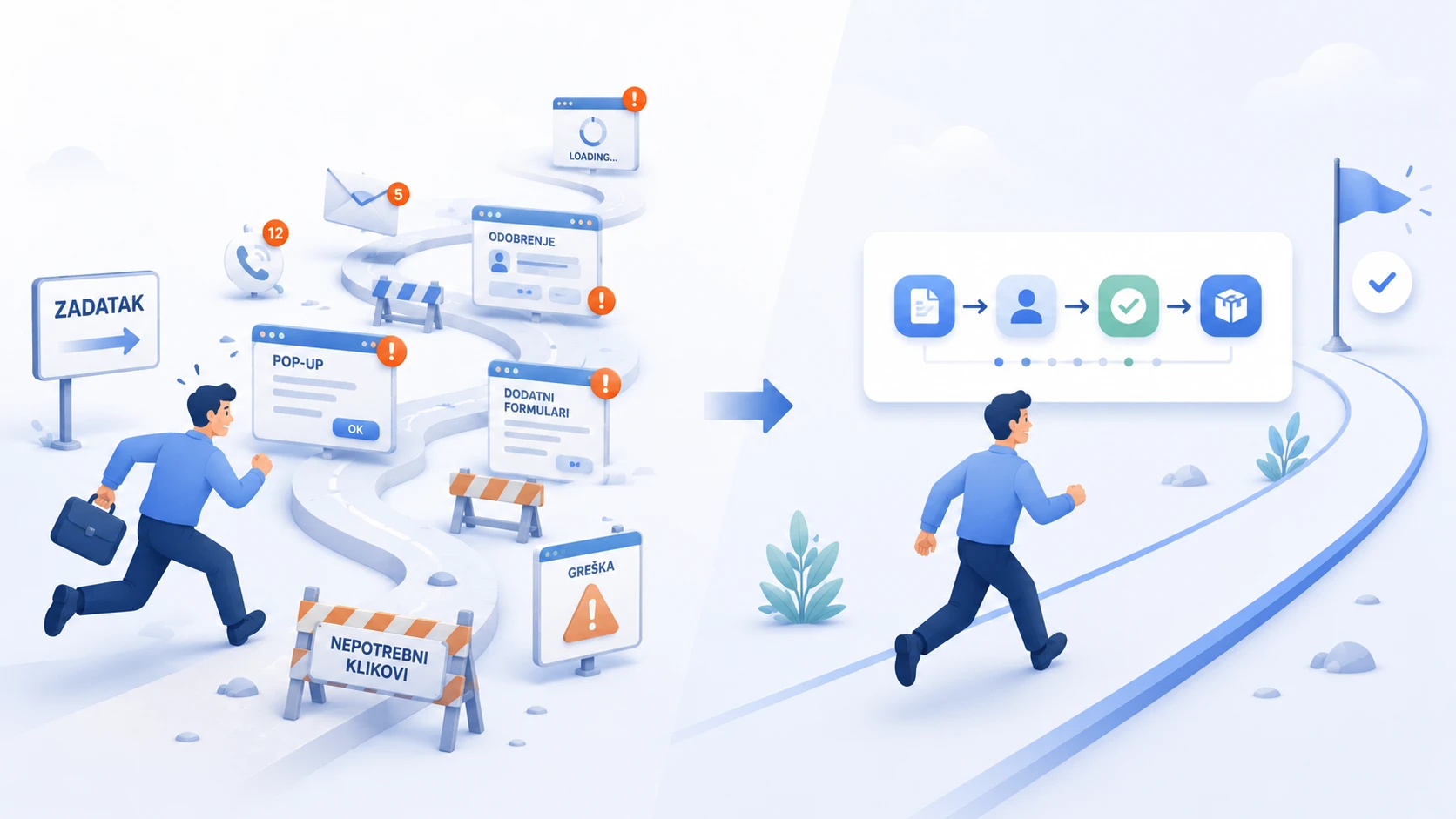
When management thinks about operating costs, it usually focuses on the most obvious items, like rent, equipment purchases, or marketing expenses. But the biggest invisible drain of capital happens precisely in those hours your highly paid experts spend every day searching for lost information in emails and manually copying data from one system to another. The systemic cause of this drain isn’t the workers’ incompetence, but the fact that you’re pushing an exponentially larger volume of work through an architecture designed for a time when you were a company three times smaller.
When real business digitalization is postponed, you fall into the classic trap of linear scaling: for every new hundred orders, you have to hire one more operations person to process those papers by hand. Your processes rely on physical presence, individual memory, and communication through private channels.
Every time you hire a new administrative worker, you’re not buying long-term efficiency — you’re renting another set of hands that will do the same slow, unoptimized work of patching holes. As long as you solve volume problems solely by investing in human labor for routine tasks, your growth in the market will always be painful and financially unprofitable.
When real business digitalization is postponed, you fall into the classic trap of linear scaling: for every new hundred orders, you have to hire one more operations person to process those papers by hand. Your processes rely on physical presence, individual memory, and communication through private channels.
Every time you hire a new administrative worker, you’re not buying long-term efficiency — you’re renting another set of hands that will do the same slow, unoptimized work of patching holes. As long as you solve volume problems solely by investing in human labor for routine tasks, your growth in the market will always be painful and financially unprofitable.
The cost of making decisions based on stale data
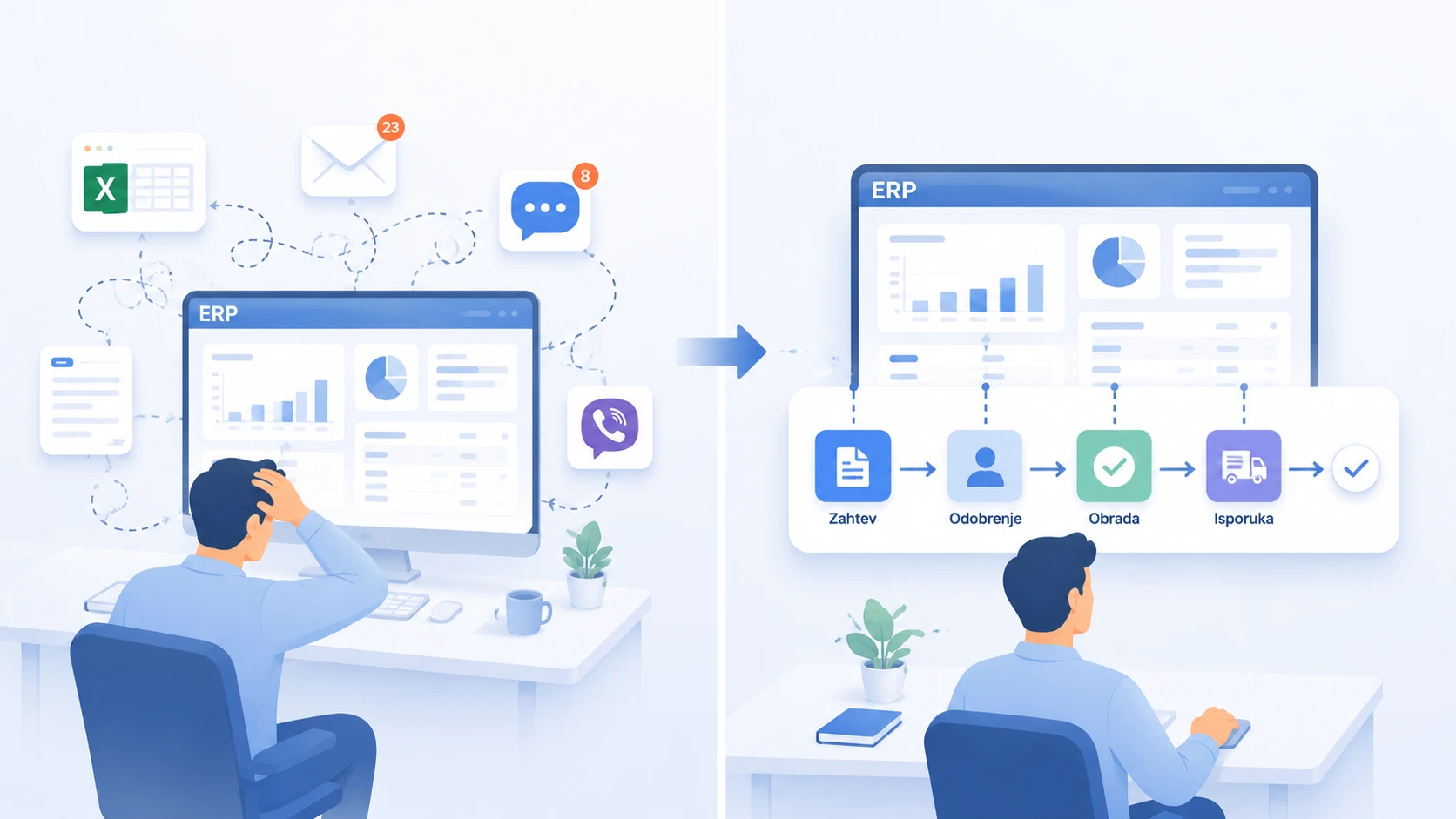
Postponing operational order doesn’t only cost you through salaries and overtime. The real price is paid in missed opportunities and wrong business decisions. When your departments operate in isolated information silos, you never have an accurate, real-time picture of the state of the company. Digital transformation is just an illusion if it boils down to each department having its own favorite software, while those tools don’t talk to each other.
In such a fragmented environment, the data that reaches you is always retrospective and outdated. You make key financial decisions today based on reports that operations staff manually put together yesterday afternoon, gathering fragments from three different databases and piles of unread emails.
Because of that time gap, you might approve a mass marketing campaign for a product that’s already reserved out in the field, or delay collecting a receivable because sales didn’t notify finance of the delivery on time. Every minute your business information waits for someone to process it by hand directly melts away your negotiating power and your capital in front of the competition.
In such a fragmented environment, the data that reaches you is always retrospective and outdated. You make key financial decisions today based on reports that operations staff manually put together yesterday afternoon, gathering fragments from three different databases and piles of unread emails.
Because of that time gap, you might approve a mass marketing campaign for a product that’s already reserved out in the field, or delay collecting a receivable because sales didn’t notify finance of the delivery on time. Every minute your business information waits for someone to process it by hand directly melts away your negotiating power and your capital in front of the competition.
Operational stability that doesn't depend on headcount
Truly escaping this cost spiral means establishing an architecture in which the volume of work no longer dictates the number of people needed to carry it out. When processes are properly orchestrated, handling a hundred requests takes the same manual effort as handling a thousand, because the system pushes the procedure forward instead of your workers.
Imagine an operation where, when the webshop suddenly takes in double the average number of orders, your managers don’t schedule crisis meetings or frantically call workers in from their vacation.
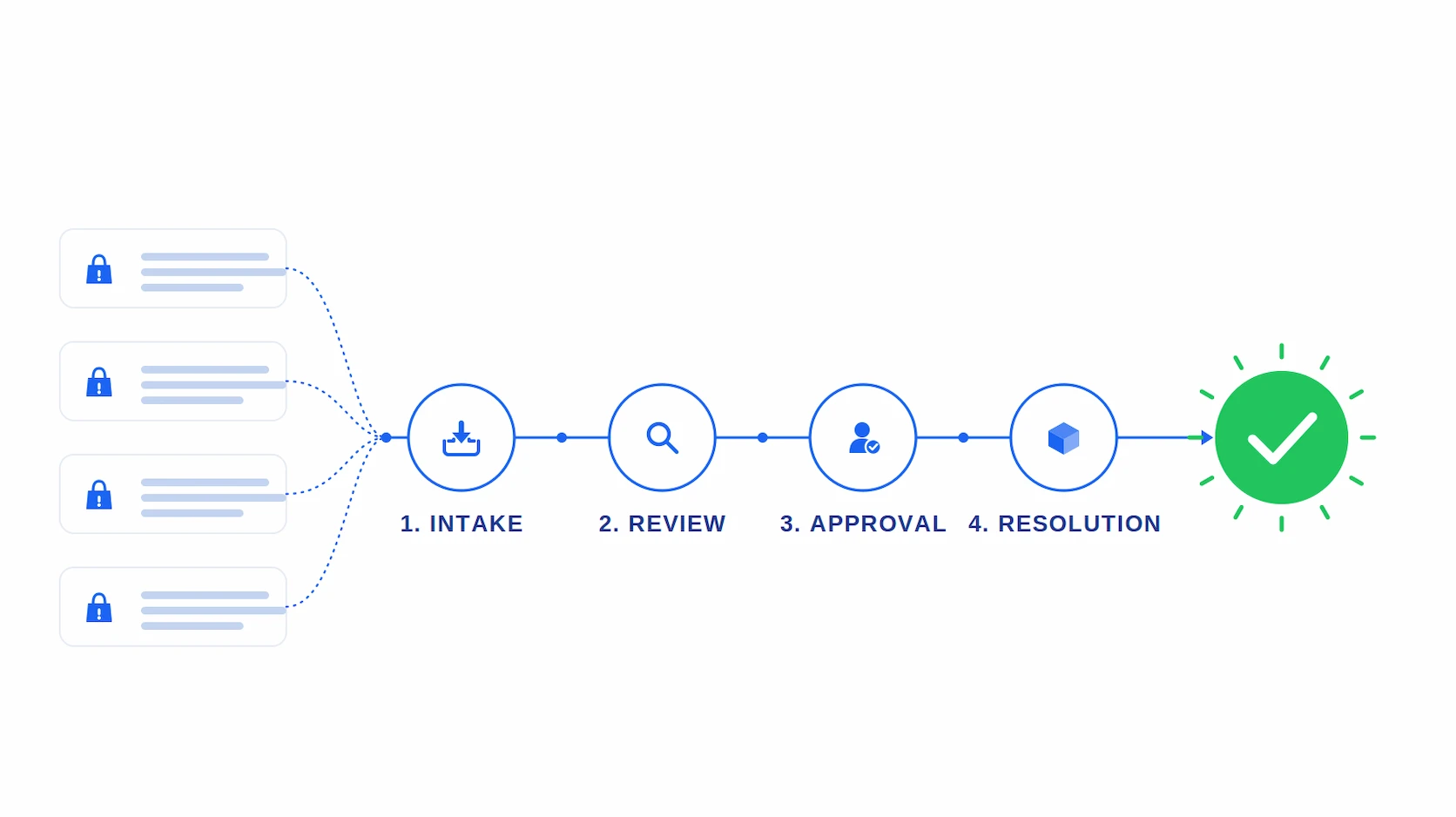
A smart system absorbs the first impact on its own: it instantly filters requests, automatically checks stock availability, sends out quotes, and only when it runs into a problem that truly requires a human decision does it forward that single task to exactly the person responsible for solving it. Your workers don’t work harder and longer when sales spike — they work smarter, focusing on proactive quality control instead of chasing paperwork.
Imagine an operation where, when the webshop suddenly takes in double the average number of orders, your managers don’t schedule crisis meetings or frantically call workers in from their vacation.
A smart system absorbs the first impact on its own: it instantly filters requests, automatically checks stock availability, sends out quotes, and only when it runs into a problem that truly requires a human decision does it forward that single task to exactly the person responsible for solving it. Your workers don’t work harder and longer when sales spike — they work smarter, focusing on proactive quality control instead of chasing paperwork.
How orchestration puts out operational fires and protects profit
To achieve this kind of stability in practice, you need an agile layer that bridges the gap between your software databases and the unpredictable work of employees out in the field. This is where a business orchestration platform shows its greatest value, taking on the role of an invisible dispatcher that precisely directs traffic across the entire company.
Through sSuite solutions, your business teams take absolute control over the flows of information, no matter how complex they are. Instead of waiting months for an external IT firm to patch the holes in your process with expensive coding, the sSuite no-code platform lets you design and implement the logic by which your business actually operates yourself.
By integrating the sSuite architecture, ePlaneta managed to fully unify and stabilize its process for handling mass orders, from the customer’s click to delivery. Work speed increased several times over without major new hiring in logistics. The system took over all the administration and notifications, allowing the experienced team to focus solely on accurate packing and delivery. In their case, automation turned into a concrete tool for preserving the profit margin during serious growth in workload.
Through sSuite solutions, your business teams take absolute control over the flows of information, no matter how complex they are. Instead of waiting months for an external IT firm to patch the holes in your process with expensive coding, the sSuite no-code platform lets you design and implement the logic by which your business actually operates yourself.
By integrating the sSuite architecture, ePlaneta managed to fully unify and stabilize its process for handling mass orders, from the customer’s click to delivery. Work speed increased several times over without major new hiring in logistics. The system took over all the administration and notifications, allowing the experienced team to focus solely on accurate packing and delivery. In their case, automation turned into a concrete tool for preserving the profit margin during serious growth in workload.
Every day of delay has its price
Every workday in which your best experts have to manually fix the failings of a bad system is a day in which you’ve thrown a piece of pure profit out the window.
Contact Sistemiv for a demo of the platform and solutions and stop the daily seepage of money into the idle motion of invisible administration.
Contact Sistemiv for a demo of the platform and solutions and stop the daily seepage of money into the idle motion of invisible administration.