It’s Monday, nine in the morning. Your company has just finished implementing a leading ERP system — a process that took more than eighteen months and cost considerably more than originally planned. Leadership believes an important stage of digital transformation is complete, the risk is behind you, and operations will now run flawlessly.
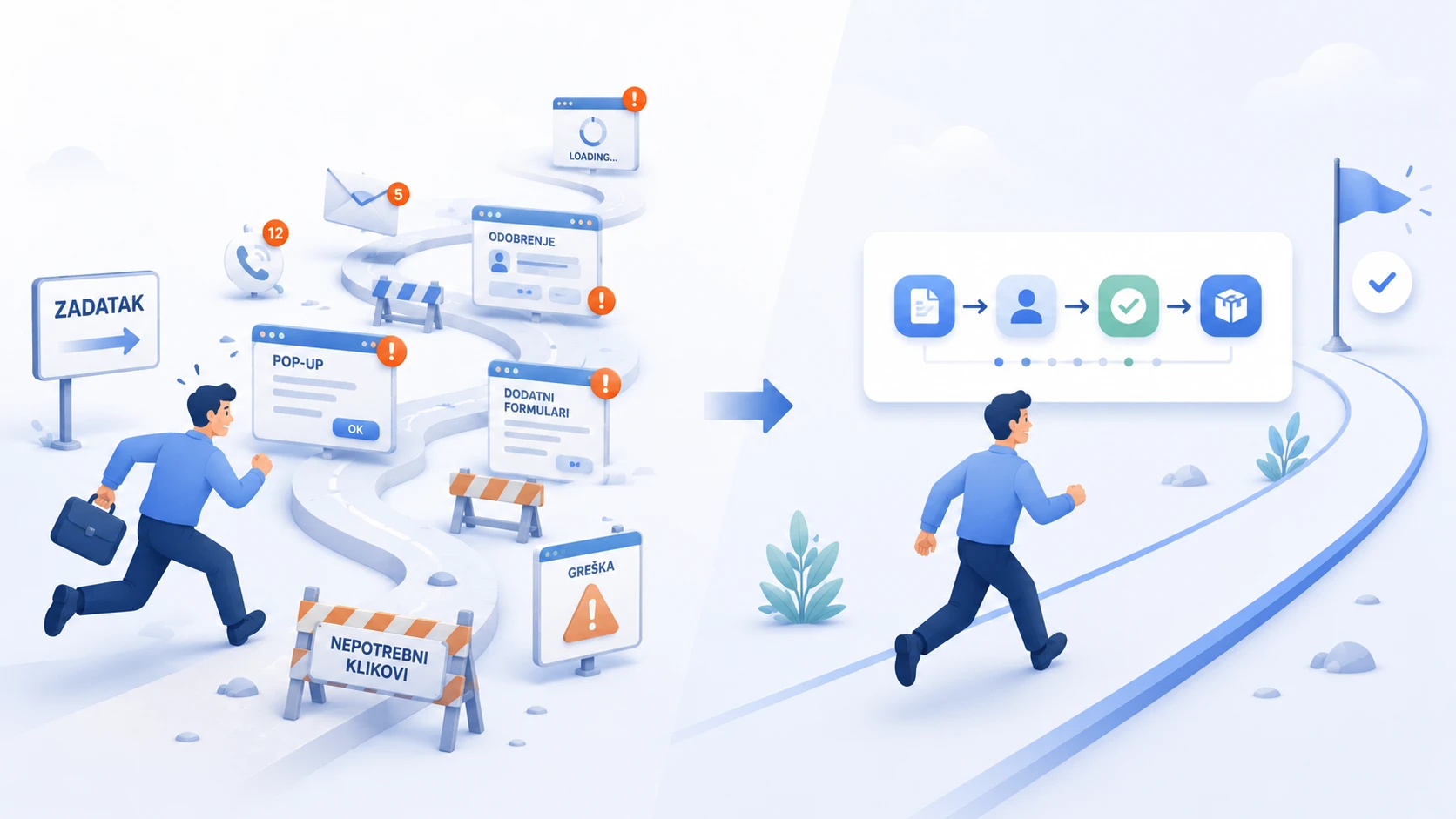
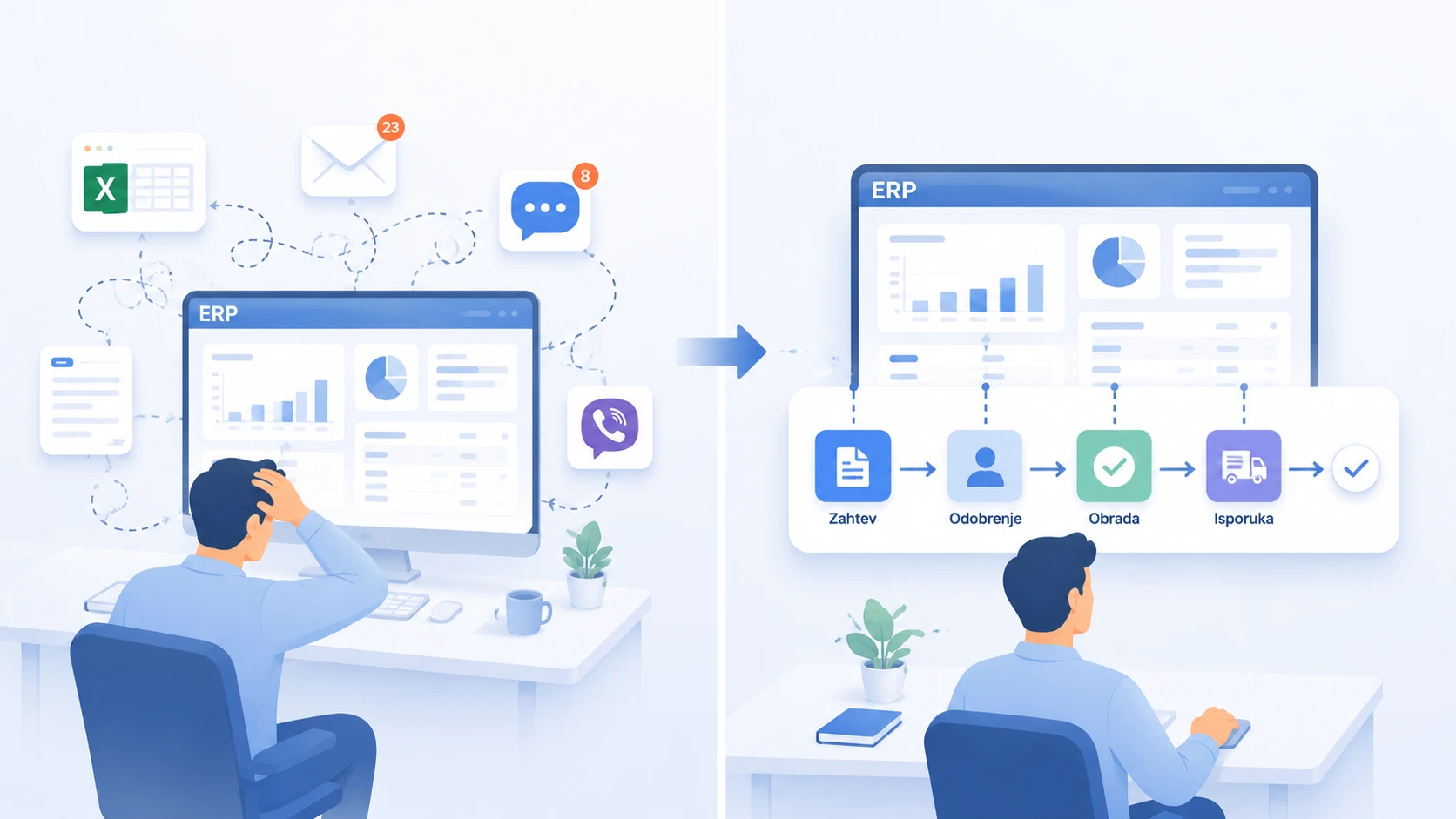
But if you walk over to the procurement department, you’ll find an operations manager manually exporting data from that very same state-of-the-art system into a massive Excel spreadsheet. Why? Because the new software takes fifteen clicks just to approve a single out-of-the-ordinary order, and the warehouse doesn’t even get an automatic notification when a priority changes.
Instead of working inside the system, your employees are working around it. Data is routinely sent by email, urgent situations are handled through private Viber groups, and printed delivery notes still physically circulate between floors. Your operations people lose hours to admin work, the IT manager explains that the platform technically does exactly what it was bought to do, and you — the owner — wonder where that return on investment is.
The problem doesn’t lie with the people, but with the infrastructure.
But if you walk over to the procurement department, you’ll find an operations manager manually exporting data from that very same state-of-the-art system into a massive Excel spreadsheet. Why? Because the new software takes fifteen clicks just to approve a single out-of-the-ordinary order, and the warehouse doesn’t even get an automatic notification when a priority changes.
Instead of working inside the system, your employees are working around it. Data is routinely sent by email, urgent situations are handled through private Viber groups, and printed delivery notes still physically circulate between floors. Your operations people lose hours to admin work, the IT manager explains that the platform technically does exactly what it was bought to do, and you — the owner — wonder where that return on investment is.
The problem doesn’t lie with the people, but with the infrastructure.
Why an ERP can't manage day-to-day tasks on its own
This scenario arises from a fundamental misunderstanding of what an ERP actually is. It’s an outstanding tool for managing and planning a company’s resources — one that relies on a database and ensures your finances are legally compliant, your inventory is precisely accounted for, and your client data is centralized.
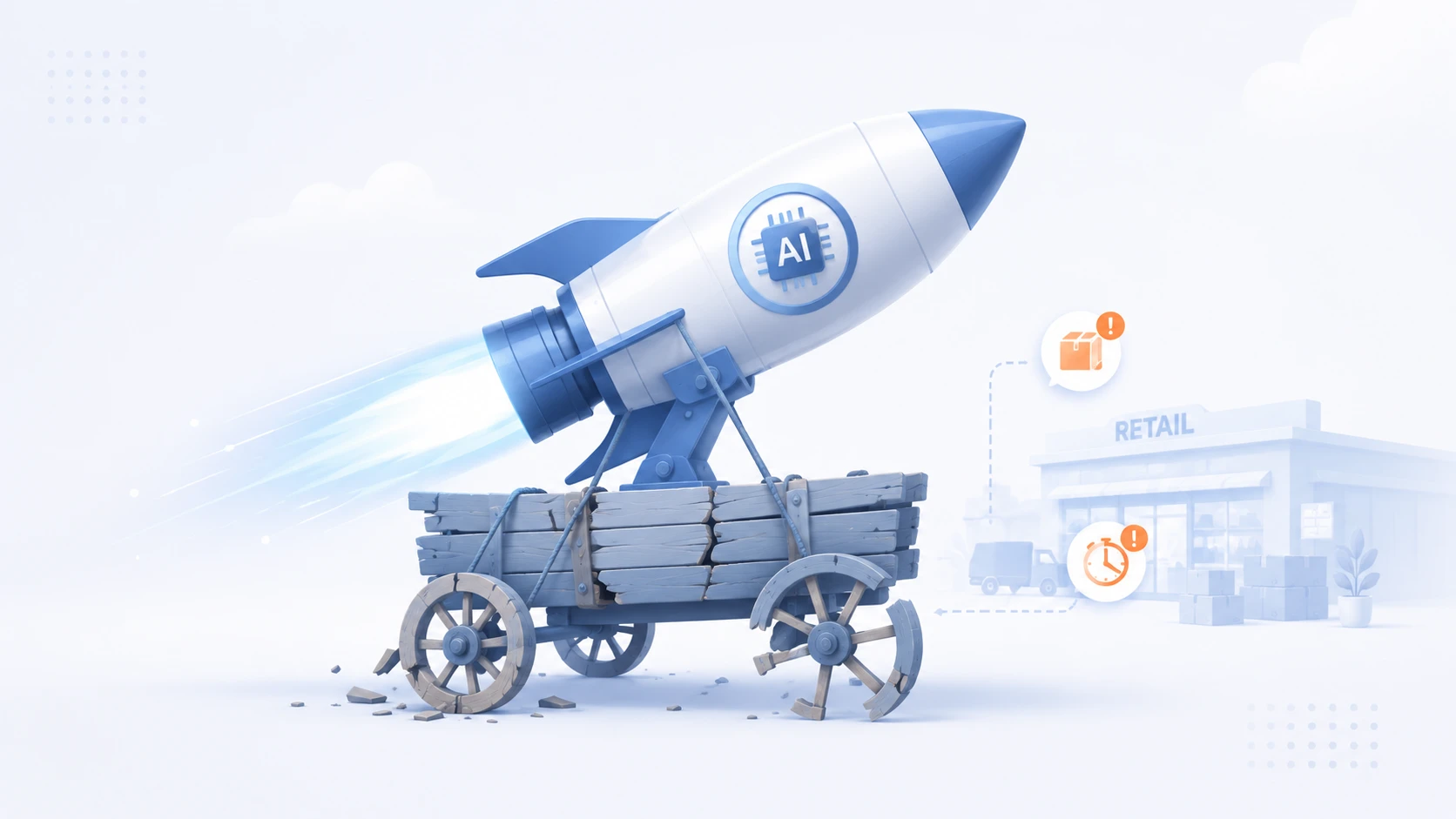
An ERP, however, isn’t designed to independently manage the dynamic, unpredictable flow of everyday tasks. It records and organizes data superbly, but it doesn’t drive the work forward.
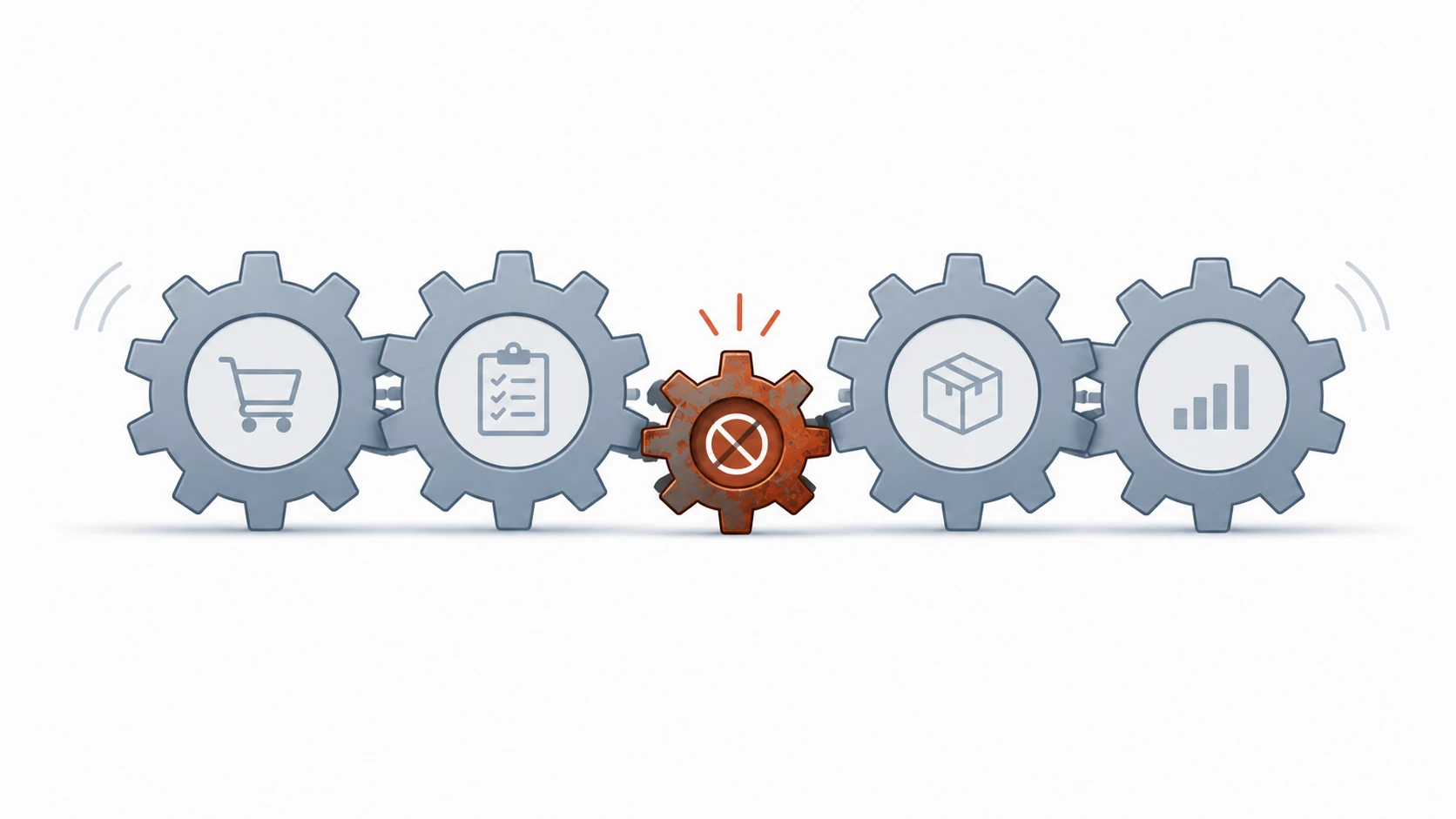
The reason your team still relies so heavily on manual methods is that an ERP was never built to steer that constant, shifting flow of daily obligations. When an order requires an exception to the rules, or when a complex complaint needs urgent approval from three different departments within a set deadline, the rigid architecture becomes a serious bottleneck. The IT department doesn’t have the capacity to write new code for every new operational requirement, so the system stagnates and your people improvise around it.
The systemic cause of this problem is the structural gap between where your data statically lives and how your teams actually need to communicate in order to deliver a result to the client on time.
An ERP, however, isn’t designed to independently manage the dynamic, unpredictable flow of everyday tasks. It records and organizes data superbly, but it doesn’t drive the work forward.
The reason your team still relies so heavily on manual methods is that an ERP was never built to steer that constant, shifting flow of daily obligations. When an order requires an exception to the rules, or when a complex complaint needs urgent approval from three different departments within a set deadline, the rigid architecture becomes a serious bottleneck. The IT department doesn’t have the capacity to write new code for every new operational requirement, so the system stagnates and your people improvise around it.
The systemic cause of this problem is the structural gap between where your data statically lives and how your teams actually need to communicate in order to deliver a result to the client on time.
From storing information to guiding the team
The real solution doesn’t mean replacing the ERP you’ve just installed, nor forcing your operations people to work in an environment that slows them down. The solution lies in introducing a layer that intelligently manages business logic and takes responsibility for getting every task to the right person, at the right time, with a clear deadline.
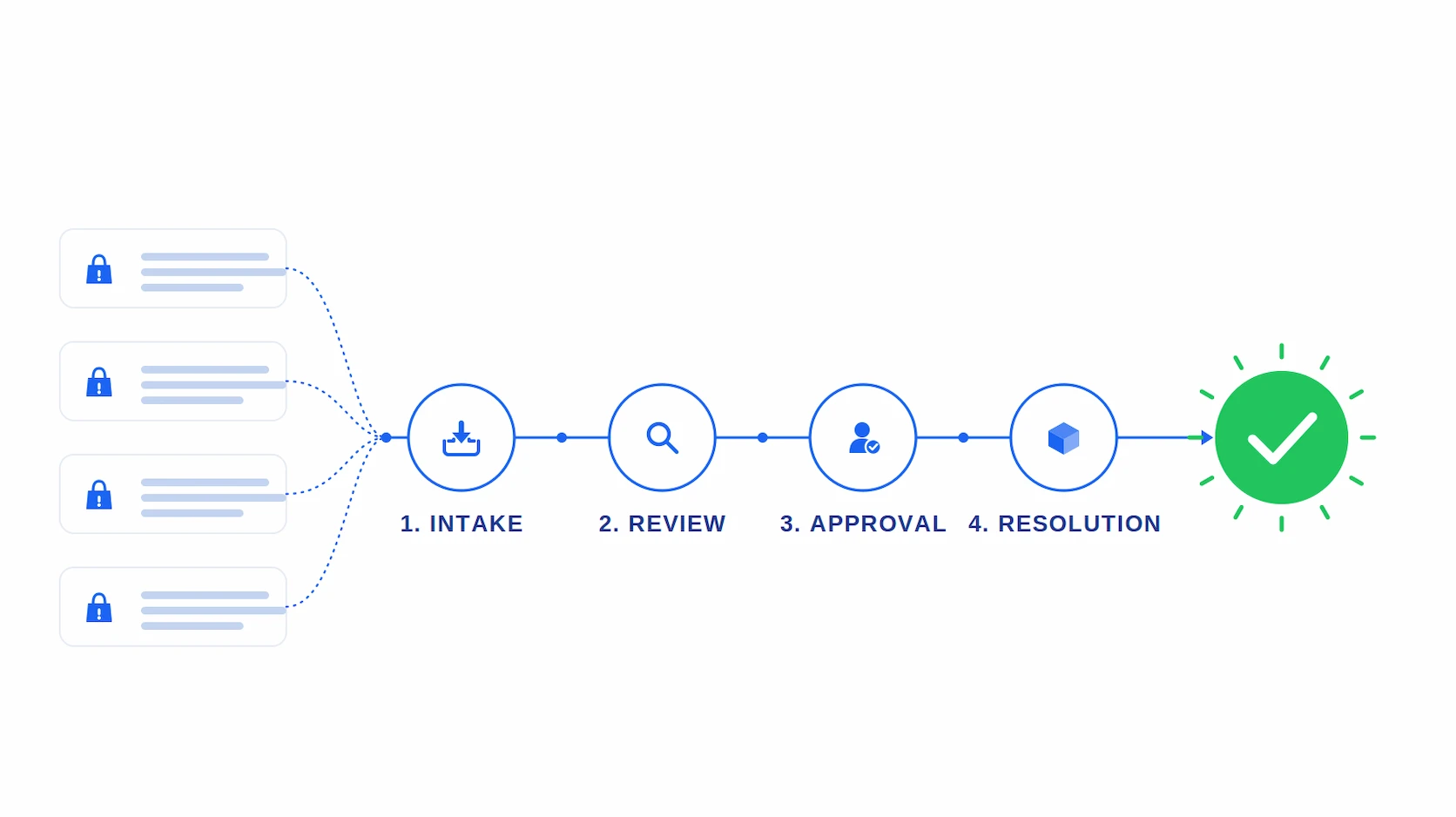
Imagine a workday in which your database still remains the single source of truth, but everyday communication and task execution flow through a fluid process. When a complex request comes in from an important client, the employee doesn’t spend 40 minutes searching through three different modules. The system automatically pulls the data it needs, assigns the task to the sales department, sets a deadline, and at the same time notifies logistics to prepare the resources.
If a holdup occurs at any point, the manager doesn’t reach for the phone to find out where the problem started. They see in real time which step the process is stuck at and which employee currently holds it. There’s no duplicate data entry, no information lost in endless email threads, and every step gets a clear owner and a measurable outcome.
Imagine a workday in which your database still remains the single source of truth, but everyday communication and task execution flow through a fluid process. When a complex request comes in from an important client, the employee doesn’t spend 40 minutes searching through three different modules. The system automatically pulls the data it needs, assigns the task to the sales department, sets a deadline, and at the same time notifies logistics to prepare the resources.
If a holdup occurs at any point, the manager doesn’t reach for the phone to find out where the problem started. They see in real time which step the process is stuck at and which employee currently holds it. There’s no duplicate data entry, no information lost in endless email threads, and every step gets a clear owner and a measurable outcome.
How orchestration works in practice
This is exactly where a business orchestration platform changes the rules of the game — not as a replacement for your existing system, but as its operational partner. sSuite acts as an agile layer placed on top of your existing databases, allowing teams to work the way conditions on the ground actually demand.
Instead of the IT department spending months trying to modify code for every change in procedure, managers get that power in their own hands. Through an intuitive interface, business teams can design, test, and adjust processes themselves, without disrupting the central server and without waiting on developers.
ePlaneta faced exactly this kind of challenge. Processing a high volume of orders at ePlaneta required constant, fast reactions from several teams at once, and the system simply didn’t support them in that.
By introducing the sSuite architecture, the entire workflow was connected — from the customer’s first click on the website, through warehouse checks, to final delivery. Delivery speed increased dramatically, errors were eliminated, and the teams now have control over every step, while in the background the ERP is fed exclusively with accurate, verified data.
Instead of the IT department spending months trying to modify code for every change in procedure, managers get that power in their own hands. Through an intuitive interface, business teams can design, test, and adjust processes themselves, without disrupting the central server and without waiting on developers.
ePlaneta faced exactly this kind of challenge. Processing a high volume of orders at ePlaneta required constant, fast reactions from several teams at once, and the system simply didn’t support them in that.
By introducing the sSuite architecture, the entire workflow was connected — from the customer’s first click on the website, through warehouse checks, to final delivery. Delivery speed increased dramatically, errors were eliminated, and the teams now have control over every step, while in the background the ERP is fed exclusively with accurate, verified data.
A system that does the work, not your people
Buying an ERP system means laying the foundation, but not reaching the end of digital transformation. It marks the completion of one stage and the beginning of the next.
Your people shouldn’t have to bridge the technical gaps of the tool they were given day after day, turning into expensive administrators who serve the machine instead of creating value.
True operational stability is achieved only when the architecture itself pushes tasks forward, and your employees have the freedom to focus on what they’re actually paid to do. When your everyday processes flow with the same precision as your financial reports — only then is digital transformation truly complete.
Contact Sistemiv for a demo of the platform and solutions, and find out how to eliminate bottlenecks before they permanently slow your growth.
Your people shouldn’t have to bridge the technical gaps of the tool they were given day after day, turning into expensive administrators who serve the machine instead of creating value.
True operational stability is achieved only when the architecture itself pushes tasks forward, and your employees have the freedom to focus on what they’re actually paid to do. When your everyday processes flow with the same precision as your financial reports — only then is digital transformation truly complete.
Contact Sistemiv for a demo of the platform and solutions, and find out how to eliminate bottlenecks before they permanently slow your growth.